What is an IPO? Full Form, Meaning, Types & How Initial Public Offerings Work
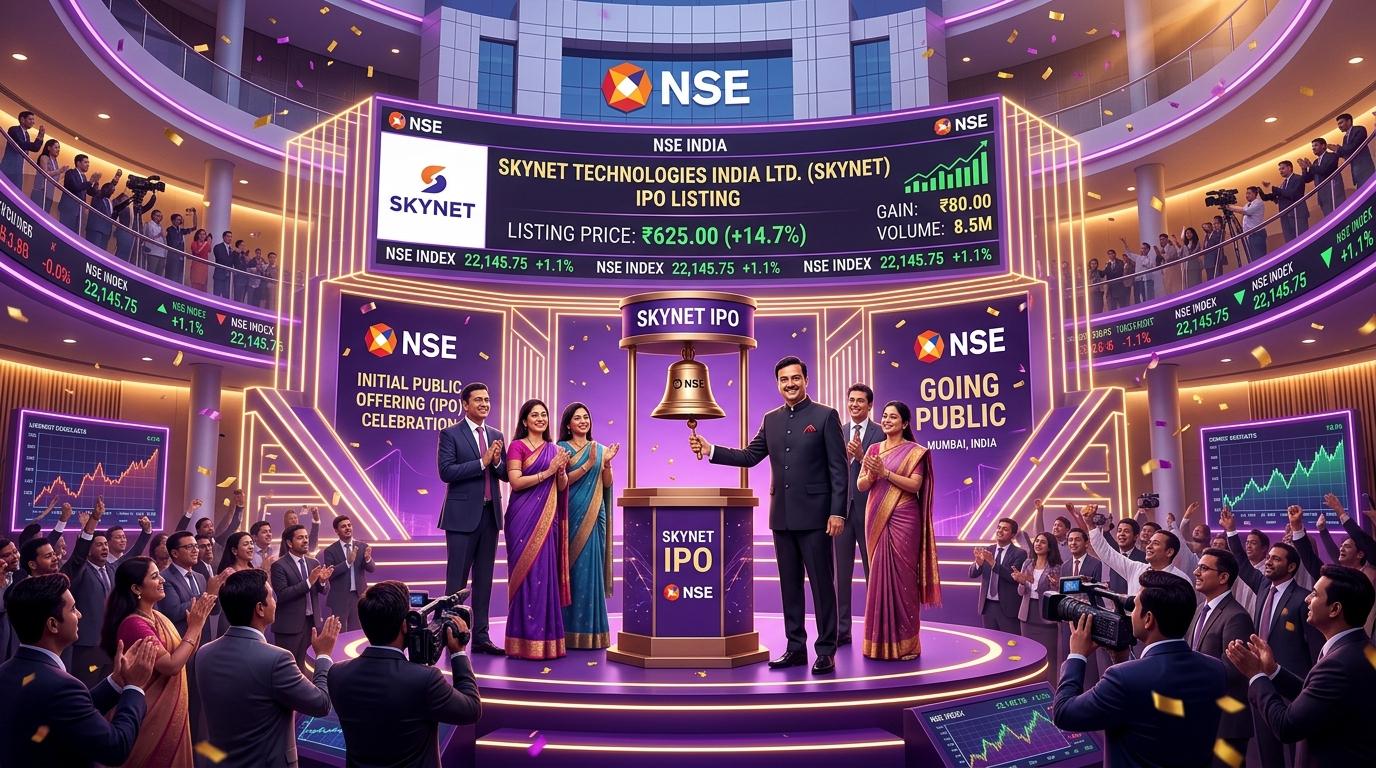
An Initial Public Offering (IPO) is the institutional mechanism through which a privately held corporation sells equity shares to institutional and retail investors for the first time, transitioning into a publicly traded corporation listed on the National Stock Exchange (NSE) and Bombay Stock Exchange (BSE). Fresh Issue vs. Offer for Sale (OFS): A Fresh Issue injects brand-new growth capital directly into the company's treasury for capex and debt retirement. An Offer for Sale (OFS) allows existing promoters or venture capital backers to sell their existing holdings to the public with ₹0 going to the company. UPI ASBA Fund Security: Retail application funds are never debited upfront; money remains safely in your bank account under an ASBA (Application Supported by Blocked Amount) lien until the basis of allotment is finalized. Fast-Track T+3 Listing: Under SEBI primary market regulations, public issues complete allotment and debut on stock exchanges within exactly 3 business days (T+3) after the subscription window closes.
In the modern financial ecosystem, few market events generate as much retail excitement, media buzz, and institutional capital movement as an Initial Public Offering (IPO). When pioneering enterprises—such as tech innovators, consumer powerhouses, or state-owned infrastructure giants—decide to transition into publicly listed entities, millions of retail investors, mutual fund houses, and foreign portfolio managers rush to participate.
However, for an individual stepping into the stock market for the first time, primary market terminology can appear overwhelmingly complex. Concepts like Draft Red Herring Prospectus (DRHP), Book Building, Cut-Off Price, Anchor Lock-In, and UPI ASBA Mandates often create unnecessary friction. In this comprehensive masterclass, we break down what an IPO is in clear, plain language, explain why businesses choose to go public, examine the critical difference between Fresh Issues and OFS, and walk you through the complete regulatory lifecycle from filing to listing day.
1. What is an IPO? (Full Form & Core Definition)
The acronym IPO stands for Initial Public Offering. In simple terms, an IPO is the formal corporate process through which a privately held enterprise sells its equity shares to institutional and retail public investors for the very first time. By completing an IPO, the company transitions from a private entity into a publicly traded corporation listed on recognized Indian stock exchanges—principally the National Stock Exchange (NSE) and the Bombay Stock Exchange (BSE).
To understand the magnitude of this transition, consider the foundational differences between a private and a public company:
- Private Company State (Pre-IPO): The company's ownership is concentrated among founders, family promoters, angel investors, and private equity or venture capital funds. The shares cannot be traded by everyday citizens, financial statements are not accessible to the public, and ownership transfers require private contractual agreements.
- Public Company State (Post-IPO): The company's equity is distributed among thousands or millions of individual and institutional shareholders. Anyone with an active, verified Demat and Trading account can freely buy and sell shares during standard stock exchange trading hours (9:15 AM to 3:30 PM IST). Furthermore, the company becomes bound by strict SEBI disclosure norms, requiring quarterly earnings publications and immediate disclosure of material events.
An IPO represents the core mechanism of the Primary Market. In the primary market, new securities are created and sold directly by the issuer to investors. Once these shares debut on the stock exchange, they enter the Secondary Market, where investors trade existing shares amongst each other without capital flowing to or from the issuing company.
| Operational Dimension | Private Company (Pre-IPO) | Public Listed Company (Post-IPO) |
|---|---|---|
| Ownership & Shareholders | Restricted to founders, promoters, angel investors, and venture capital funds (typically <200 members). | Open to millions of retail individuals, domestic institutions (DIIs), and foreign portfolio investors (FPIs). |
| Share Liquidity & Trading | Illiquid; shares cannot be freely sold and require board approval or private contractual transfers. | High liquidity; shares are bought and sold instantly during trading hours on NSE & BSE via Demat accounts. |
| Regulatory Oversight | Governed primarily by the Ministry of Corporate Affairs (MCA) under the Companies Act, 2013. | Strict dual oversight by SEBI (LODR Regulations) and Stock Exchanges with mandatory continuous disclosures. |
| Financial Transparency | Financial statements are private and filed annually with the Registrar of Companies (RoC). | Mandatory publication of quarterly audited financial results, investor presentations, and annual reports. |
| Valuation Discovery | Determined during private funding rounds via negotiations with venture capital/private equity investors. | Market-driven, real-time price discovery determined continuously by supply and demand on the exchange floor. |
| Access to Capital | Limited to promoter capital, bank loans, and private equity / venture capital infusions. | Unrestricted access to public capital via Rights Issues, Qualified Institutional Placements (QIPs), and FPOs. |
2. Why Do Companies Go Public? (The 4 Strategic Motivations)
Launching a public offering is an intensive, highly regulated, and costly undertaking involving investment bankers, auditors, registrars, and legal counsels. Companies embark on this journey to achieve four major strategic objectives:
- Raising Long-Term Growth Capital (Fresh Issue): Rapidly scaling businesses require massive capital expenditure (Capex) to construct new manufacturing plants, expand retail showroom networks, invest in cutting-edge research & development (R&D), or build technological infrastructure. Raising equity capital through an IPO allows companies to fund growth without incurring interest burdens or monthly debt service obligations.
- Retiring High-Interest Debt: Many capital-intensive enterprises utilize a portion of their IPO proceeds to repay expensive term loans and working capital borrowings. Eliminating high finance costs directly expands the company's operating profit margins and net earnings, strengthening the corporate balance sheet.
- Providing Liquidity to Early-Stage Backers (Offer for Sale): Early venture capital (VC) funds, private equity (PE) investors, and angel backers typically invest during a startup's infancy with an investment horizon of 5 to 10 years. An IPO provides these institutional investors with a transparent, highly liquid exit route to monetize their early equity stakes.
- Elevating Brand Prestige, Governance & Currency for Acquisitions: Listed corporations enjoy substantially higher institutional credibility, greater media visibility, and stronger customer trust. Moreover, a publicly traded company can utilize its listed equity shares as direct transactional currency to acquire competitor businesses through stock-swap mergers.
3. Types of Public Offerings: Fresh Issue vs. Offer for Sale (OFS)
When reviewing an IPO prospectus, one of the most critical structural elements to evaluate is how the total issue size is divided between a Fresh Issue and an Offer for Sale (OFS). This distinction determines where your invested money actually flows.
In a Fresh Issue, the company creates and issues brand-new equity shares. The capital collected from public investors flows directly into the company's corporate bank account. This capital is deployed towards statutory business objectives detailed in the prospectus—such as factory construction, machinery procurement, working capital, or debt repayment. While a fresh issue dilutes the percentage ownership of existing promoters, it expands the company's total asset base.
In an Offer for Sale (OFS), no new shares are created. Instead, existing shareholders—such as promoters, founders, or private equity partners—sell their existing personal equity holdings to incoming public investors. The money collected from an OFS goes straight into the bank accounts of the selling shareholders; the company itself receives exactly ₹0. While an OFS does not dilute the company's total equity share count, it indicates that early backers or promoters are reducing their financial exposure.
For example, in mega offerings like the Hyundai Motor India IPO, the entire issue was structured as a 100% Offer for Sale by the foreign parent entity. Conversely, growth-oriented offerings like the Purple Style Labs IPO are structured as 100% Fresh Issues to directly finance omnichannel store expansion and working capital.
| Key Parameter | Fresh Issue | Offer for Sale (OFS) |
|---|---|---|
| Fund Destination | Directly into the Company's Bank Account | To Selling Promoters / PE Shareholders (₹0 to Company) |
| Share Capital Impact | New shares created; expands total equity base | Total share count remains unchanged (ownership transfer) |
| Promoter Stake Impact | Dilutes promoter holding percentage automatically | Directly reduces the absolute share quantity owned by sellers |
| Primary Investor Goal | Funds corporate expansion, capex, and debt reduction | Provides liquidity and partial/full exit for early backers |
| Impact on Earnings Per Share (EPS) | Dilutes EPS in the near term until new capex generates returns | Neutral immediate impact on baseline EPS |
4. The 7-Step Lifecycle of an IPO in India (From DRHP to Exchange Debut)
Under the regulatory supervision of the Securities and Exchange Board of India (SEBI), taking a company public follows a structured, multi-stage compliance roadmap:
Step 1: Appointing Merchant Bankers & Underwriters
The company selects SEBI-registered Merchant Bankers (also known as Book Running Lead Managers or BRLMs), legal advisors, statutory auditors, and registrars. The lead managers conduct comprehensive due diligence on the issuer's financial history, corporate governance, legal disputes, and operational metrics.
Step 2: Drafting & Filing the DRHP with SEBI
The merchant bankers draft the Draft Red Herring Prospectus (DRHP) and submit it to SEBI, the NSE, and the BSE. The DRHP is published on SEBI's official website for a mandatory 21-day public comments period. SEBI reviews the disclosures, issues formal queries, and grants an observation letter once all compliance conditions are satisfied.
Step 3: Institutional Roadshows & Price Band Discovery
The company's executive leadership conducts institutional roadshows across major financial centers to present their business model to mutual funds, insurance companies, and sovereign wealth funds. Based on institutional feedback and market appetite, the issuer and lead managers determine the Price Band (Floor Price and Cap Price) and issue lot size. Under SEBI rules, the Cap Price cannot exceed 120% of the Floor Price (maximum 20% spread).
Step 4: Anchor Investor Bidding (T-1 Day)
Exactly one business day before the public offering opens (T-1), Qualified Institutional Buyers participate in the dedicated Anchor Investor bidding round. Anchor allocations build early institutional credibility. To curb short-term speculation, SEBI mandates that 50% of anchor shares remain locked in for 30 days, while the remaining 50% remain locked in for 90 days from the date of allotment.
Step 5: Public Subscription Window & UPI ASBA Bidding (3 Days)
The IPO opens to the general public across Retail, NII, and QIB categories for a standard duration of 3 to 5 business days (between 10:00 AM and 5:00 PM IST). Retail investors submit bids through their stockbroker application using UPI ASBA (Application Supported by Blocked Amount). Funds are never deducted upfront; they are placed under a banking lien in the applicant's account.
Step 6: Basis of Allotment & Demat Credit
Once the bidding window closes, the appointed Registrar to the Issue (RTA)—such as Link Intime, KFin Technologies, or Bigshare Services—verifies all bid applications against PAN and depository records. If the issue is oversubscribed, the registrar executes an automated computerized lottery under SEBI guidelines. Allotted shares are credited electronically to investors' NSDL/CDSL Demat accounts, while unallocated funds are automatically released from bank liens within 24 to 48 hours.
Step 7: Exchange Listing Day & Price Discovery (T+3 Days)
Under SEBI's expedited settlement framework (SEBI Circular SEBI/HO/CFD/TPD1/CIR/P/2023/140), the company officially lists on the stock exchanges on the 3rd business day following the issue closing date (T+3). At 9:00 AM IST on listing day, the stock enters a 45-minute pre-market price discovery call auction, establishing the official opening price before normal secondary trading commences at 10:00 AM.
| Lifecycle Stage | Key Actions & Deliverables | Primary Regulatory Authority | Standard Timeline |
|---|---|---|---|
| 1. Regulatory Filing | Submission of Draft Red Herring Prospectus (DRHP) | SEBI & Stock Exchanges (NSE/BSE) | 2 to 4 Months before launch |
| 2. RHP & Price Band | Filing of Red Herring Prospectus with RoC & Price Band announcement | Registrar of Companies (RoC) / SEBI | 3 to 7 Days before opening |
| 3. Anchor Allocation | Institutional bidding & allocation with 30/90-day lock-ins | Stock Exchanges | T-1 Day (Eve of public issue) |
| 4. Public Bidding | Retail & NII bidding via UPI ASBA blocking | NSE / BSE Bidding Platforms | Day T (Opens for 3 business days) |
| 5. Basis of Allotment | Verification of valid bids & computerized lottery execution | Designated Stock Exchange & Registrar | T+1 to T+2 Business Days |
| 6. Fund Unblock & Credit | Shares credited to CDSL/NSDL; bank liens released | Depositories & Sponsor Banks | T+2 Business Days |
| 7. Stock Exchange Debut | Pre-open price discovery (9:00 AM) & secondary trading (10:00 AM) | NSE & BSE Equity Segments | T+3 Business Days (Mandatory) |
5. Understanding Key IPO Terminology (Jargon Buster for Beginners)
To navigate public issue offer documents and make informed decisions, every investor should master these foundational terms:
- Price Band (Floor vs. Cap Price): The price range within which investors can submit their bids. The lowest acceptable price is the Floor Price, while the highest price is the Cap Price. Under SEBI rules, the cap price cannot exceed 120% of the floor price (a 20% maximum spread).
- Lot Size: Public issues are not bought as individual shares; they are bundled into fixed share quantities known as "lots." For example, if an IPO has a price band of ₹200–₹210 and a lot size of 70 shares, one minimum retail application requires ₹14,700 (70 shares × ₹210).
- Cut-Off Price: A bidding option available exclusively to Retail Individual Investors (RII). Selecting "Cut-Off" indicates that you agree to purchase shares at whatever final issue price the company settles upon. Retail applicants should always tick the Cut-Off box to prevent application rejection if the issue gets priced at the upper band cap.
- Issue Size: The total monetary value of equity shares offered to the market (e.g., ₹1,000 Crore), consisting of the Fresh Issue amount, the OFS component, or a combination of both.
- Grey Market Premium (GMP): An unofficial, unregulated over-the-counter sentiment indicator where traders quote cash premiums for IPO shares prior to exchange listing. While GMP offers insight into short-term market appetite, it is not regulated by SEBI and is prone to rapid swings. To understand how grey market trading operates, read our detailed guide on What is GMP in IPO.
- Registrar to the Issue (RTA): An independent SEBI-registered institution (e.g., Link Intime, KFintech) responsible for processing bid data, eliminating duplicate PAN applications, conducting allotment lotteries, and instructing sponsor banks to unblock investor funds.
| Terminology | Regulatory & Market Definition | Practical Formula / Calculation | Strategic Significance for Investors |
|---|---|---|---|
| Price Band | The price corridor established by the issuer within which all investor bids must be submitted. | Cap Price ≤ 120% × Floor Price (Floor Price + Max 20% Spread) |
Ensures a fair price discovery corridor while preventing arbitrary promoter pricing distortions. |
| Minimum Lot Size | The minimum fixed bundle of equity shares an applicant must bid for in a single application. | Retail Ticket = Lot Size × Bid Price (Cap Price) |
Structures standard retail tickets between ₹14,000 and ₹15,000 as per SEBI retail allocation policy. |
| Cut-Off Price | A statutory bidding mechanism enabling retail applicants to agree to the final determined issue price. | Bid Price = Upper Cap Price (Automatically Locked) |
Guarantees that your retail application is not disqualified if institutional demand prices the issue at the cap. |
| Grey Market Premium (GMP) | The unofficial cash premium quoted in over-the-counter forward trading ahead of exchange listing. | Estimated Listing Price = Cap Price + GMP |
Provides early directional indicator of market sentiment and listing day premium expectations. |
| Subscription Ratio | The measure of public and institutional demand relative to total shares available in each bucket. | Subscription (x) = Total Shares Bid ÷ Total Shares Offered |
High QIB subscription (>10x) signals strong institutional conviction and robust listing probability. |
| Anchor Lock-In Period | Mandatory holding period restricting Anchor Investors from immediately selling allotted shares. | 50% shares locked for 30 days; remaining 50% locked for 90 days from allotment | Protects retail allottees from massive institutional dumping on Day 1 of exchange trading. |
6. Investor Categories & Allocation Quotas in Indian IPOs
Under SEBI's Issue of Capital and Disclosure Requirements (ICDR) framework, IPO shares are systematically reserved across distinct investor categories to ensure equitable capital market participation:
- Retail Individual Investors (RII): Individual investors applying for an aggregate investment value of up to ₹2,00,000. In companies qualifying through SEBI's profitability route (Regulation 6(1)), a minimum of 35% of the net issue is reserved for retail applicants. In non-profitable or emerging tech companies qualifying via the institutional route (Regulation 6(2)), retail reservation is set at a minimum of 10%.
- Non-Institutional Investors (NII / HNI): High Net-Worth Individuals, corporate bodies, and trusts bidding for values exceeding ₹2,00,000. Under SEBI regulations, the NII category is subdivided into two distinct tranches:
- Small NII (sNII): Bids between ₹2,00,000 and ₹10,00,000 (reserved one-third of the total NII allocation, or 5% of the net issue). Bids can be submitted using UPI ASBA up to the ₹5,00,000 limit.
- Big NII (bNII): Bids exceeding ₹10,00,000 (reserved two-thirds of the total NII allocation, or 10% of the net issue). These bids must be submitted using Net Banking ASBA.
- Qualified Institutional Buyers (QIB): Mutual funds, foreign portfolio investors (FPIs), scheduled commercial banks, insurance companies, and pension funds. The QIB portion typically represents 50% (profitability route) or 75% (institutional route) of the offering, with up to 60% of the QIB portion allocated to designated Anchor Investors.
Additionally, issuers often establish specialized reservation quotas offering discounts of 5% to 10% for permanent employees or existing parent company shareholders.
| Investor Category | Investment Value Limits | Profitability Route Quota (Reg 6(1)) | Institutional Route Quota (Reg 6(2)) | Allotment & Allocation Method | Lock-In Restrictions |
|---|---|---|---|---|---|
| Retail Individual Investor (RII) | ₹14,000 up to ₹2,00,000 | Minimum 35% of net issue | Minimum 10% of net issue | Computerized Lottery (1 minimum lot per unique PAN) | No Lock-In (Can sell on Listing Day at 10:00 AM) |
| Small NII (sNII / HNI) | Above ₹2,00,000 up to ₹10,00,000 | 5% of net issue (1/3rd of total 15% NII) | 5% of net issue (1/3rd of total 15% NII) | Computerized Lottery (Min NII lot bundle per PAN) | No Lock-In (Can sell on Listing Day) |
| Big NII (bNII / HNI) | Above ₹10,00,000 (No upper cap) | 10% of net issue (2/3rds of total 15% NII) | 10% of net issue (2/3rds of total 15% NII) | Proportionate Allotment (or Lottery if heavy demand) | No Lock-In (Can trade on Listing Day) |
| Qualified Institutional Buyers (QIB) | Institutional scale (Crores) | Maximum 50% of net issue | Minimum 75% of net issue | Discretionary / Proportionate allocation by Lead Managers | No general Lock-In for regular QIB bidders |
| Anchor Investors (QIB Sub-bucket) | Minimum ₹10 Crore per anchor | Up to 60% of total QIB quota | Up to 60% of total QIB quota | Discretionary allocation allocated on T-1 day | 50% locked for 30 days; 50% locked for 90 days |
7. How IPO Allotment Works: The SEBI Lottery Rule Explained
A frequent question from first-time applicants is: "If I apply for 10 lots in the retail category, will my chances of getting an allotment increase tenfold?"
The answer is No. Under SEBI's standardized retail allotment framework, when an IPO's retail category is oversubscribed, the allotment algorithm strictly prioritizes maximum unique allottee reach:
- The registrar pools all valid retail applications submitted at the cut-off price.
- If the total number of retail applicants exceeds the available number of minimum lots, a computerized lottery is executed.
- Each lucky winner in the lottery receives exactly one minimum lot, regardless of whether they bid for 1 lot or 13 lots.
- Only if shares remain after every successful retail applicant receives 1 lot are additional lots distributed proportionately.
Consequently, placing bids for multiple lots under a single PAN card does not improve your probability in an oversubscribed retail offering. To legitimately enhance your family's allotment odds, you should submit single-lot applications across multiple independent Demat accounts belonging to family members with separate, verified PAN cards. For a deep dive into the mathematical proof, read our guide on IPO Allotment Chances for Multiple Lots and follow our practical walkthrough in How to Invest in an IPO.
| Bidding Strategy | Number of Applications | Total Lots Applied | Total Capital Blocked (UPI ASBA) | Allotment Probability (10x Oversubscription) | Max Possible Allotment | Strategic Verdict |
|---|---|---|---|---|---|---|
| Single PAN — 1 Min Lot | 1 Application | 1 Lot (e.g., ₹15,000) | ₹15,000 | 1 in 10 (10.0% odds) | 1 Lot (₹15,000 value) | Standard Baseline (Capital Efficient) |
| Single PAN — 13 Max Lots | 1 Application | 13 Lots (₹1,95,000) | ₹1,95,000 | 1 in 10 (10.0% odds) | 1 Lot only (SEBI Lottery Rule) | Inefficient (Blocks ₹1.95L with zero extra lottery edge) |
| Family Strategy — 3 Separate PANs | 3 Independent Applications | 3 Lots (1 lot each) | ₹45,000 | ~27.1% combined probability | Up to 3 Lots (1 per account) | Highly Recommended (Maximizes lottery reach) |
| Family Strategy — 5 Separate PANs | 5 Independent Applications | 5 Lots (1 lot each) | ₹75,000 | ~40.9% combined probability | Up to 5 Lots (1 per account) | Optimal Retail Edge (Substantial allotment probability) |
8. Benefits vs. Inherent Risks of Investing in IPOs
Participating in primary market offerings offers substantial opportunities alongside distinct equity risks that every prudent investor must evaluate:
Key Benefits:
- Potential for Listing Day Premiums: High-quality companies priced attractively often experience robust demand upon listing, rewarding successful allottees with double-digit percentage gains on listing day.
- Early Access to High-Growth Sector Champions: IPOs provide the earliest opportunity for retail investors to own shares in pioneering sector leaders before long-term compounding takes place.
- Zero Brokerage on Bidding: Modern discount brokers do not charge brokerage or platform commissions for submitting IPO applications through UPI ASBA.
- Complete Capital Safety via ASBA: Because your application funds remain in your interest-earning bank account under a temporary lien until allotment, you never risk broker misappropriation of funds.
Inherent Risks:
- Listing Day Discounts: If overall market sentiment turns bearish or the company's valuation is aggressively overpriced relative to peers, shares can list below the issue price, resulting in immediate capital loss.
- Limited Public Operating History: Unlike established listed companies with years of quarterly audited results, unlisted companies provide limited publicly scrutinized historical operational data.
- Post-Anchor Lock-in Supply Overhang: When the 30-day and 90-day anchor investor lock-in periods expire, institutional selling can cause short-term downward price volatility in newly listed stocks.
- Execution and Business Risks: Promoters may face unforeseen delays in executing the capex plans outlined in their prospectus, negatively affecting future earnings growth. Also, explore our comparison between Mainboard IPOs vs SME IPOs to understand liquidity and lot size differences.
| Investment Dimension | Primary Advantage / Upside | Potential Risk / Downside | Recommended Investor Safeguard |
|---|---|---|---|
| Listing Performance | Immediate capital appreciation on Day 1 (Listing Gain Premiums). | Discount listing below issue price if broader market or valuation is weak. | Only bid on issues with strong QIB institutional backing (>10x) and reasonable P/E vs. listed peers. |
| Capital Allocation | 100% funds safety via UPI ASBA (money earns bank interest during lien). | Opportunity cost of blocked capital (3 business days) during volatile markets. | Submit bids on Day 3 afternoon after reviewing final institutional subscription trends. |
| Company Maturity | Ground-floor entry into rapidly growing sectoral pioneers and market leaders. | Limited historical public reporting and post-listing corporate governance tests. | Scrutinize RHP for past 3-year revenue CAGR, operating cash flows, and promoter integrity. |
| Post-Listing Liquidity | Zero lock-in for retail allottees; 100% freedom to book profits at market open. | Supply overhang when 30-day and 90-day Anchor lock-in windows expire. | If investing for pure listing gains, set a trailing stop loss and exit on Day 1 during peak volume. |
9. Essential Checklist Before Applying for Your First IPO
Before submitting a bid for an upcoming public issue, ensure you have completed these four essential prerequisites:
- Active Demat and Trading Account: Ensure your Demat account is active and mapped to your correct PAN. If you do not have an account yet, you can open a free Demat account online in under 5 minutes using 100% paperless Aadhaar e-KYC.
- PAN-Matched UPI Banking: Ensure your UPI application (Google Pay, PhonePe, BHIM, Paytm) is linked to a personal savings bank account carrying the exact same PAN as your Demat account. Third-party UPI applications (e.g., using a friend's UPI for your Demat application) are automatically rejected by exchange validation systems.
- Fundamental Review of the RHP: Check the company's 3-year revenue and profit trajectory, return on equity (RoE), debt-to-equity ratio, valuation metrics (P/E ratio vs. listed peers), and the specific "Objects of the Issue" to confirm where your funds are being deployed.
- Monitor Live Subscription Trends: Track real-time QIB, NII, and Retail subscription numbers alongside indicative market sentiment on the Digital Arthalaya IPO Hub before finalizing your bid on Day 3. For any post-allotment lien release concerns, consult our IPO ASBA Fund Unblock Timeline Guide.
| Audit Parameter | Benchmark / Ideal Criteria | Critical Warning Sign / Red Flag | Primary Source Document |
|---|---|---|---|
| Issue Structure | Healthy Fresh Issue component (>50%) for growth capex and debt reduction. | 100% Offer for Sale (OFS) with private equity selling out at peak valuations. | RHP Section: "Capital Structure & Objects of the Issue" |
| Revenue & Profitability | Consistent year-on-year revenue growth (>15% CAGR) with positive operating cash flow. | Declining net profit margins, erratic revenue spikes right before IPO, or negative cash flow. | RHP Section: "Restated Consolidated Financial Statements" |
| Valuation Multiples | P/E and EV/EBITDA multiples in line with or at a discount to established listed industry peers. | Demanding exorbitant P/E multiples (>60x) without superior revenue growth or moat. | RHP Section: "Basis for Issue Price & Peer Comparison" |
| Debt & Leverage | Debt-to-Equity ratio < 1.0x with interest coverage ratio > 3.0x. | High debt load with no IPO proceeds allocated towards loan retirement. | RHP Section: "Financial Indebtedness" |
| Litigation & Promoters | Clean track record with no material promoter disputes or statutory tax non-compliance. | Significant criminal litigations, unresolved SEBI proceedings, or promoter pledging. | RHP Section: "Outstanding Litigations & Material Developments" |
| Institutional Demand | Strong Qualified Institutional Buyer (QIB) subscription (>15x) on Day 3. | Under-subscribed QIB portion (<1x) on the final closing day. | NSE / BSE Official Live Subscription Bidding Terminal |
10. Statutory Regulatory References & Official Frameworks
Public issues, depository credits, and electronic bidding frameworks in India are governed by statutory regulatory enactments:
- SEBI (Issue of Capital and Disclosure Requirements) Regulations, 2018 (SEBI ICDR): The primary regulatory framework governing public offerings, eligibility criteria (Regulation 6(1) vs 6(2)), allocation quotas, and price band corridors. Visit the official SEBI Public Issues & Disclosures Portal to inspect registered prospectuses.
- National Stock Exchange (NSE) & Bombay Stock Exchange (BSE): Primary listing venues operating electronic bidding terminals and pre-open price discovery sessions. Track live exchange bidding data via NSE IPO Data and BSE Public Issues.
- The Depositories Act, 1996 & SEBI (Depositories and Participants) Regulations, 2018: Statutory laws establishing dematerialized share holding and electronic allotment credits administered by NSDL and CDSL.
- NPCI Unified Payments Interface (UPI) Procedural Guidelines: Operational directives governing mandate creation, transaction caps (₹5,00,000 for IPOs), and banking lien revocations.
Frequently Asked Questions (Institutional FAQ Desk)
Educational & Regulatory Disclosures
Source Attribution: This masterclass educational guide is produced strictly for investor awareness and capital markets literacy in alignment with SEBI Investor Education and Protection Fund (IEPF) guidelines.
Non-Advisory Mandate & Risk Warning: Digital Arthalaya is strictly an independent financial education portal and is not a SEBI-registered investment advisor or stock broker. IPO bidding and equity trading involve market risk, including potential loss of principal. Readers must conduct their own independent due diligence and read all offer documents carefully before making investment commitments.