What is IPO GMP? Grey Market Premium Meaning, Calculation & Risks
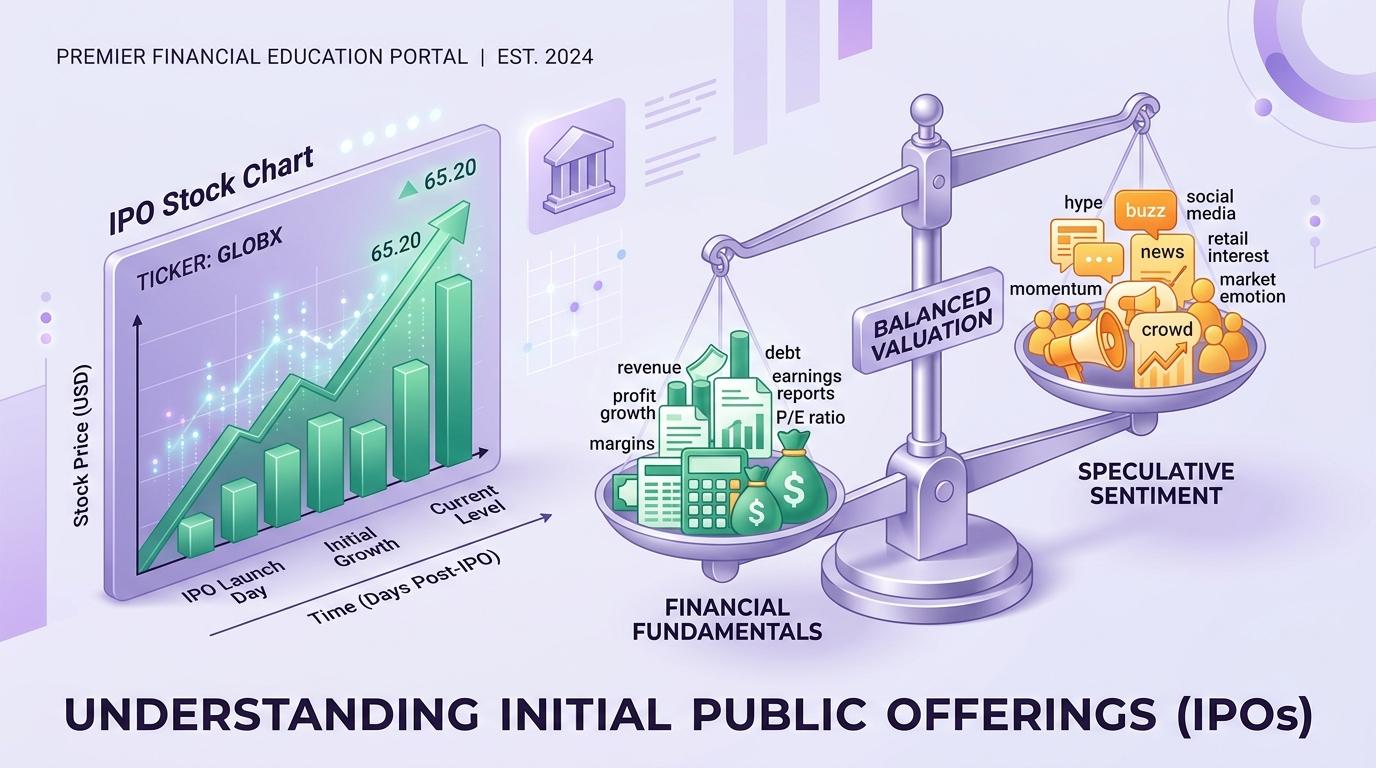
Grey Market Premium (GMP) is an informal, unregulated price premium at which an unlisted company's shares or IPO applications are privately quoted in over-the-counter (OTC) circles before official stock exchange listing. Zero Regulatory Backing: GMP is neither monitored, approved, nor published by SEBI, the National Stock Exchange (NSE), or the Bombay Stock Exchange (BSE). Off-market transactions enjoy zero investor protection fund (IPF) coverage or legal dispute recourse. Arithmetic vs. Reality: The informal implied listing price is calculated as Issue Cap Price + Quoted GMP. However, this is an informal sentiment observation, not a guarantee. The true opening price is determined strictly via the 45-minute exchange Pre-Open Call Auction on listing day (9:00 AM to 9:45 AM IST). Substantial Investor Risks: Because grey market trading volume is thin, rates can be artificially manipulated by operators to generate retail FOMO, and sudden market downturns can evaporate high GMPs overnight before exchange debut.
Whenever a high-profile company announces its Initial Public Offering (IPO), financial news channels, social media groups, and retail investor forums immediately begin buzzing with discussions surrounding its Grey Market Premium (GMP). When an offering commands a robust premium of 40%, 60%, or even 100%, retail bidding often surges as millions of applicants rush to capture anticipated listing day profits.
However, for beginners and disciplined long-term investors, the grey market represents one of the most misunderstood and hazardous concepts in the Indian stock market. What exactly is GMP? Is it legally recognized by regulators? How is it discovered, and why do different websites report contradictory figures on the same afternoon? In this masterclass, we break down the reality of the IPO grey market, explain key dealer terminology like Kostak and Subject to Sauda, and examine why smart investors never base their capital commitments solely on unofficial market whispers.
1. What is the IPO Grey Market? (Core Definition & Mechanics)
In the Indian financial ecosystem, the Grey Market refers to an informal, unorganized, and over-the-counter (OTC) network of dealers, speculators, and high-net-worth individuals who trade in IPO applications or unlisted shares before they are officially admitted for trading on recognized stock exchanges—specifically the National Stock Exchange of India (NSE) and the Bombay Stock Exchange (BSE).
Unlike the regulated secondary stock market, which operates through SEBI-registered clearing corporations, electronic order matching, and transparent order books, the grey market functions entirely on personal trust, bilateral relationships, and unrecorded messaging groups. No actual equity shares change hands in the grey market prior to listing, because the shares do not yet exist in electronic form on the exchange. Instead, grey market participants trade in informal forward commitments to transfer shares or cash profits once official depository allotments and listing debut occur.
2. Is GMP Official? The SEBI & Statutory Reality
A critical foundational truth every market participant must understand is that there is no such thing as an official GMP. The grey market exists entirely outside the statutory capital market framework:
Statutory Reality Checklist
- Zero Recognition from SEBI: Under the Securities Contracts (Regulation) Act, 1956 (SCRA), trading in securities outside recognized stock exchanges is unauthorized. SEBI does not monitor, regulate, or endorse grey market operations.
- Not Published by Exchanges: Neither the NSE nor the BSE records, verifies, or disseminates GMP figures. Any number displayed on third-party blogs or broker websites is compiled from informal dealer polls.
- Zero Investor Protections: Because grey market deals are informal, participants do not receive access to SEBI's SCORES grievance portal, exchange arbitration panels, or the Investor Protection Fund (IPF) in the event of default or fraud.
3. How IPO GMP Works: The Arithmetic & Implied Pricing
In grey market terminology, GMP represents the unofficial per-share cash premium that buyers are willing to pay above the company's official issue price cap. The arithmetic calculation is expressed through a straightforward formula:
The GMP Implied Pricing Formula
- Implied Pre-Listing Price = Official Issue Cap Price + Quoted GMP
- Indicative Percentage Premium = (Quoted GMP ÷ Official Issue Cap Price) × 100
- Implied Retail Lot Profit = Quoted GMP × Lot Size
Depending on speculative sentiment and institutional appetite, observed GMP can fall into one of three distinct states:
- Positive GMP (+₹50): Unofficial buyers are willing to pay a premium above the issue price due to perceived high institutional demand and positive market sentiment.
- Zero / Flat GMP (₹0): Muted interest or an absence of active trading deals; indicates that informal participants expect the stock to list close to its issue price.
- Negative GMP / Discount (-₹20): Unofficial participants expect the stock to debut below its issue price due to aggressive valuations, weak financials, or adverse market conditions.
Worked Numerical Example:
Suppose an upcoming IPO announces a price band of ₹200 to ₹210 per share with a minimum lot size of 70 shares. If informal trading circles quote a GMP of ₹63:
- Upper Cap Price: ₹210
- Quoted GMP: ₹63
- Implied Opening Price: ₹210 + ₹63 = ₹273 per share
- Expected Percentage Gain: (₹63 ÷ ₹210) × 100 = +30.0%
- Implied Profit on 1 Retail Lot: ₹63 × 70 shares = ₹4,410
Important Caveat: This is strictly an arithmetic calculation reflecting informal opinions. It is not an official forecast and does not guarantee that the stock will open at ₹273 on listing day.
4. Key Grey Market Terms: Kostak Rate vs. Subject to Sauda
Beyond simple share premiums, informal OTC market participants trade IPO applications through two specialized deal structures:
| Comparison Dimension | Kostak Rate | Subject to Sauda |
|---|---|---|
| Deal Concept | Outright sale of an entire IPO application to a buyer before allotment results are declared. | A conditional contract where profit is payable strictly upon confirmed share allotment. |
| Allotment Dependency | Zero Allotment Dependency (Fixed cash payout). | 100% Contingent on winning the computerized lottery. |
| Buyer's Risk | High risk: If the application receives 0 shares in the lottery, the buyer loses the Kostak fee entirely. | Lower risk: The buyer pays only if shares are actually allotted to the seller's Demat account. |
| Seller's Outcome | Guaranteed modest profit (e.g., ₹500 to ₹1,000 per application) regardless of allotment outcome. | Higher profit potential if allotted; receives ₹0 if no allotment occurs. |
| Regulatory Status | Informal & Unregulated | Informal & Unregulated |
5. Issue Price vs. GMP vs. Actual Listing Price: Critical Differences
A widespread misconception among beginner investors is believing that Issue Price + GMP = Guaranteed Listing Morning Opening Price. In reality, these three prices belong to completely separate financial mechanisms:
| Operational Dimension | Official Issue Price | Grey Market Premium (GMP) | Exchange Listing Opening Price |
|---|---|---|---|
| Determining Authority | Issuer Company & Lead Managers (BRLMs) in consultation with exchanges. | Informal OTC brokers, dealers, and private speculative trading rings. | NSE and BSE Equity Trading Systems via computerized call auction. |
| Legal & Regulatory Status | Statutory / SEBI Registered | Unofficial / Unregulated | Statutory / Exchange Certified |
| Discovery Mechanism | Disclosed in the Red Herring Prospectus (RHP) within a 20% price band collar. | Bilateral private telephone & messaging negotiations based on perceived demand. | 45-minute Pre-Open Call Auction (9:00 AM to 9:45 AM) matching multilateral orders. |
| Trading Venue | Primary market ASBA subscription platforms. | Informal off-market cash / bilateral ledger settlements. | Recognized stock exchanges (NSE & BSE capital market segments). |
| Enforceability | 100% enforceable under SEBI ICDR and Companies Act norms. | Zero legal enforceability; carries complete counterparty default risk. | Settled with T+1 secondary clearing house guarantee. |
How the Official Listing Price is Discovered (Pre-Open Session)
On listing day (T+3), trading does not begin randomly. Between 9:00 AM and 9:45 AM IST, the stock enters a specialized Pre-Open Call Auction on the NSE and BSE:
- Institutional investors, mutual funds, HNIs, and retail allottees place buy and sell limit orders without execution.
- Between 9:45 AM and 10:00 AM, the exchange matching algorithm calculates the single price point that maximizes matched trading volume.
- This discovered equilibrium price becomes the official opening listing price. Regular continuous trading begins at 10:00 AM IST.
6. Why Do GMP Figures Differ Across Websites?
Retail investors often notice that three different financial blogs display three completely different GMP numbers for the same IPO on the same afternoon. The structural causes for these discrepancies include:
- Regional Dealer Hub Dispersions: The grey market is unorganized and localized. A dealer ring in Ahmedabad may quote a ₹45 premium based on local HNI transactions, while a desk in Mumbai or Rajkot quotes ₹38.
- Timestamp Latency: Grey market sentiment can shift within thirty minutes based on institutional QIB subscription updates. One website may display a morning quote while another updates at 4:00 PM.
- Illiquid Spreads & Small Volumes: Because grey market volumes are minuscule compared to public exchange volumes, a small bilateral trade of just a few lots can artificially skew a dealer's quoted rate.
- Digital Arthalaya's Verified Standard: To prevent retail confusion, Digital Arthalaya enforces strict multi-source cross-verification. We only report an indicative range when multiple primary references align, and we explicitly mark divergent readings as
CONFLICTING / FAST-MOVING. Read our complete GMP Editorial Methodology v1 for details.
7. The 5 Major Risks of Relying on GMP for Investment Decisions
Treating GMP as a primary investment signal exposes retail investors to substantial financial risks:
- Operator Manipulation & Artificial Hype: Unscrupulous promoters or unregulated operators can circulate inflated GMP figures across social media channels to engineer artificial retail demand and ensure the issue gets subscribed.
- Extreme Pre-Listing Reversals: Geopolitical tensions, sudden corrections in the benchmark Nifty/Sensex, or negative news regarding anchor investor quality can cause a 50% GMP to collapse to zero or a discount within 24 hours.
- Historical High-GMP Listing Disasters: Indian stock market history contains numerous painful lessons where IPOs commanding 40% to 70% GMPs during the bidding window crashed to deep discounts on listing day due to unsustainable valuations.
- Distortion of Retail Lottery Odds: Exorbitant GMP headlines trigger mass retail oversubscription (often exceeding 50x to 100x), triggering SEBI's computerized draw-of-lots and driving individual allotment odds down to single digits. Learn more in our guide on IPO Allotment Chances for Multiple Lots.
- Zero Legal Protection: If an informal grey market counterparty reneges on a promised Kostak or Sauda payout, the victim has no legal standing to file a complaint with SEBI, stock exchanges, or police authorities.
8. What Serious Investors Check Instead of GMP (The RHP Framework)
Instead of relying on informal dealer whispers, disciplined investors base their capital decisions on factual, audited disclosures published in the Red Herring Prospectus (RHP):
- Valuation Multiples vs. Listed Peers: Examine the company's Price-to-Earnings (P/E), EV/EBITDA, and Price-to-Book (P/B) ratios compared to established listed competitors. Learn how to calculate fair value benchmarks in our masterclass on NSE IPO Valuation Targets.
- 3-Year Audited Financial Trajectory: Check whether revenue growth, EBITDA margins, and net profit (PAT) have shown consistent organic expansion rather than an artificial spike in the pre-IPO year.
- Objects of the Issue (Fresh Issue vs. OFS): Determine how much capital enters the company's treasury for capacity expansion and debt retirement versus how much flows to exiting promoters. Explore our breakdown in What is an IPO? Fresh Issue vs OFS.
- Day 3 QIB Subscription Numbers: Institutional investors (mutual funds, sovereign wealth funds) conduct deep forensic due diligence. Strong Qualified Institutional Buyer subscription (>15x) on Day 3 is a far more reliable indicator of institutional quality than informal grey market rumors.
9. Statutory Regulatory References & Official Frameworks
Public issues, exchange price discovery mechanisms, and investor protection in India are governed by statutory regulatory frameworks:
- Securities Contracts (Regulation) Act, 1956 (SCRA): Statutory legislation governing recognized stock exchanges and prohibiting unauthorized off-market securities dealings.
- SEBI (Issue of Capital and Disclosure Requirements) Regulations, 2018: Comprehensive regulatory framework governing public issue disclosures, book-building corridors, and statutory risk warnings. View registered prospectuses on the SEBI Public Issues Portal.
- National Stock Exchange (NSE) & BSE India Pre-Open Session Guidelines: Operational protocols governing the 45-minute call auction mechanism on listing morning. Review guidelines via NSE IPO Data and BSE Pre-Open Call Auction.
- Digital Arthalaya Editorial Policy: Our comprehensive standard for cross-verifying secondary market quotes, available in our GMP Editorial Methodology v1.
Frequently Asked Questions (Institutional FAQ Desk)
Educational & Regulatory Disclosures
Source Attribution: This masterclass educational guide is produced strictly for investor awareness and capital markets literacy in alignment with SEBI Investor Education and Protection Fund (IEPF) guidelines.
Non-Advisory Mandate & Risk Warning: Digital Arthalaya is strictly an independent financial education portal and is not a SEBI-registered investment advisor or stock broker. IPO bidding and equity trading involve market risk, including potential loss of principal. Readers must conduct their own independent due diligence and read all offer documents carefully before making investment commitments.