Open Free Demat Account Online: Zero AMC Rules, Broker Comparison & 5-Min e-KYC
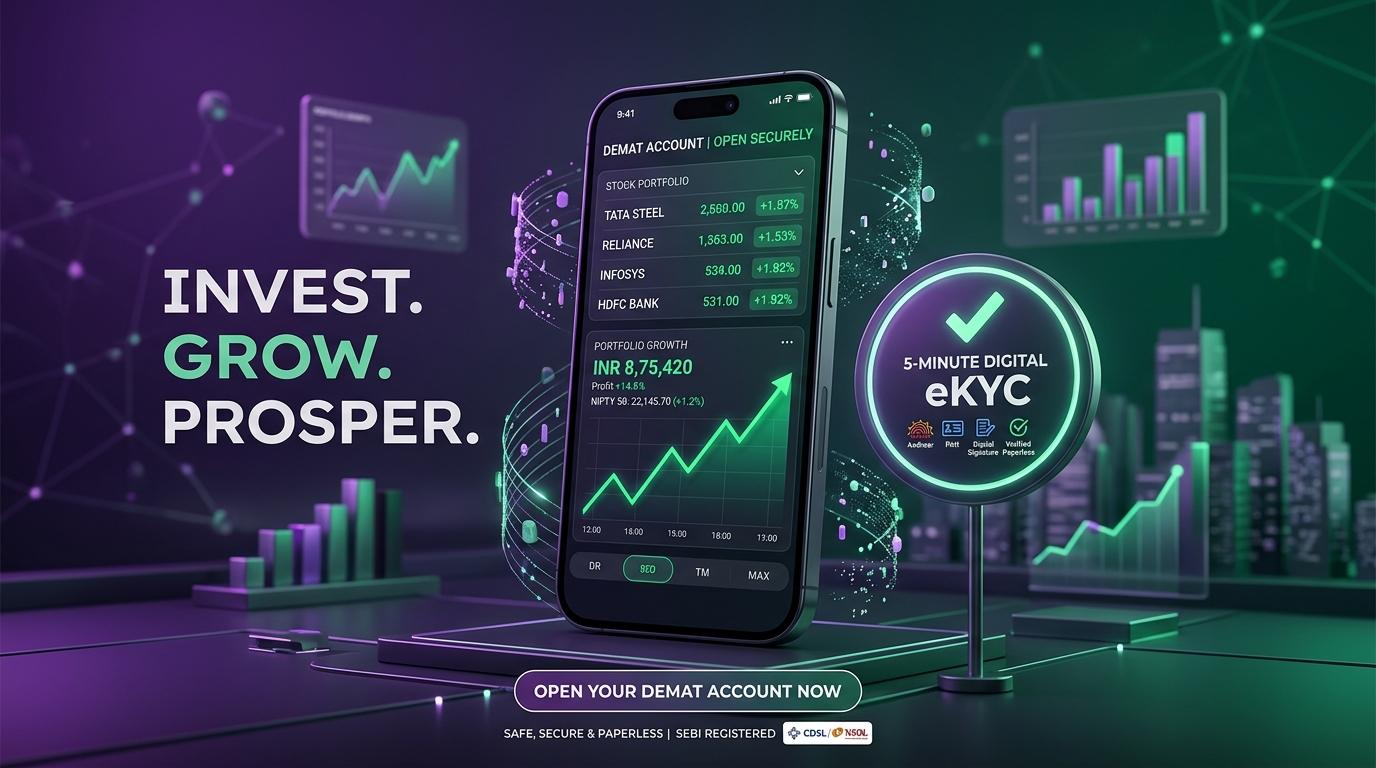
Opening a Demat account in India is now completed digitally in under 5 minutes using Aadhaar-linked OTP and DigiLocker e-KYC. Under SEBI's revised Basic Services Demat Account (BSDA) regulations (Circular SEBI/HO/MRD/MRD-PoD-2/P/CIR/2024/90), retail investors holding portfolios up to ₹4,00,000 are legally exempt from Annual Maintenance Charges (₹0 AMC). Modern discount brokers like Upstox offer zero account opening fees, ₹0 brokerage on equity delivery, and instant 1-click UPI ASBA IPO bidding. Shares and mutual fund units are held securely in government-regulated central depositories (CDSL/NSDL), guaranteeing 100% asset safety even if a broker defaults.
In the modern Indian capital markets, opening a Demat and Trading account has evolved from a cumbersome, weeks-long paperwork ordeal into a seamless, 5-minute digital onboarding experience. Backed by the Government of India's DigiLocker framework, Aadhaar e-KYC, and SEBI's paperless onboarding regulations, retail investors can now establish a fully compliant depository account directly from their smartphones.
Whether your goal is to build a long-term compounding equity portfolio, invest in sovereign gold bonds, automate mutual fund SIPs, or bid for lucrative upcoming Mainboard and SME IPOs, choosing the right brokerage platform is your foundational step. In this authoritative 2026 guide, we provide an audited fee comparison across India's top brokers, unpack SEBI's revised Zero AMC Basic Services Demat Account (BSDA) regulations, explain specialized account structures, and outline the exact 4-step paperless onboarding protocol.
1. Demat Account vs Trading Account: How Electronic Custody Works
A frequent point of confusion among first-time investors is the distinction between a Demat account and a Trading account. While modern platforms provide an integrated 2-in-1 account, they serve two distinct regulatory functions:
- Demat Account (Dematerialised Account): Functions like an electronic vault maintained by registered central depositories—either CDSL (Central Depository Services Limited) or NSDL (National Securities Depository Limited). It securely holds your equity shares, government securities, ETFs, and mutual funds in digital book-entry form. Because shares reside with the depository, your holdings remain 100% safe even if your stockbroker experiences financial distress.
- Trading Account: Functions as the operational bridge connecting your bank account to the stock exchanges (NSE and BSE). When you execute a buy or sell transaction, the trading account places the order on the exchange, debits funds from your bank, and instructs the depository to credit or debit shares to your Demat account upon T+1 settlement.
2. Comprehensive Demat Account Charges Comparison (2026 Audit)
The comparative matrix below outlines account opening charges, annual maintenance charges (AMC), delivery brokerage, and depository participant (DP) fees across India's leading brokerage firms:
| Brokerage Firm | Account Opening Fee | Annual Maintenance (AMC) | Equity Delivery Brokerage | Intraday & F&O Brokerage | DP Charges (Per Scrip Sold) | Primary Advantage |
|---|---|---|---|---|---|---|
| Upstox Pro (Recommended Partner) | ₹0 (Free) | ₹0 AMC Available (BSDA) | ₹0 Brokerage | ₹20 or 0.05% | ₹18.50 + GST | 1-Click UPI ASBA IPO Bidding & Advanced Charting |
| Zerodha Broking | ₹200 (Online) | ₹300 + GST / Year | ₹0 Brokerage | ₹20 or 0.03% | ₹13.50 + GST | Clean Web Interface & Algo Trading APIs |
| Groww (Nextbillion) | ₹0 (Free) | ₹0 AMC | ₹20 or 0.05% | ₹20 or 0.05% | ₹13.50 + GST | Integrated Direct Mutual Funds & Beginner UI |
| Angel One | ₹0 (Free) | ₹20/month (From Year 2) | ₹0 Brokerage | ₹20 or 0.25% | ₹20.00 + GST | Full-Service Advisory & ARQ Research Tools |
| ICICI Direct (Bank 3-in-1) | ₹0 to ₹999 | ₹300 to ₹700 / Year | 0.15% to 0.55% | ₹15 to ₹20 flat | ₹25.00 + GST | Direct 3-in-1 Bank Account Integration |
3. The SEBI Zero AMC Rule: Basic Services Demat Account (BSDA) Explained
Many investors avoid opening Demat accounts out of fear of recurring annual fees. However, under SEBI Circular SEBI/HO/MRD/MRD-PoD-2/P/CIR/2024/90, SEBI significantly broadened investor protections under the Basic Services Demat Account (BSDA) framework:
| Portfolio Holding Value | Permissible Annual Maintenance Charge (AMC) | Depository Electronic Statement | Statutory Regulatory Rule |
|---|---|---|---|
| Up to ₹4,00,000 | ₹0 (Statutory Free AMC) | Free Electronic CAS Statements | Mandatory BSDA Zero AMC Exemption |
| ₹4,00,001 to ₹10,00,000 | Capped at ₹100 + GST / Year | Free Electronic CAS Statements | Subsidized Retail Maintenance Slab |
| Above ₹10,00,000 | Standard Broker Tariff Applies | Physical / Electronic Monthly Statements | Standard Regular Demat Account |
Automatic BSDA Conversion: As long as an investor holds only one Demat account across all depositories where they are the primary account holder, the depository participant is legally required to classify the account under the BSDA structure without demanding separate offline paperwork.
4. Mandatory Documents Checklist for Instant 5-Minute e-KYC
To ensure your digital onboarding completes without rejection on the first attempt, prepare the following items before initiating your application:
- Permanent Account Number (PAN): Original physical card or e-PAN copy. (Mandatory under SEBI and Income Tax regulations).
- Aadhaar Card with Mobile Linkage: Your active mobile number must be linked to Aadhaar to receive the 6-digit UIDAI authentication OTP for DigiLocker document fetch and electronic signing.
- Bank Account Proof: A cancelled cheque, bank statement, or passbook copy showing your Name, Account Number, and IFSC Code. (Brokers verify this instantly via a ₹1 penny-drop API).
- Digital Signature: A clear signature on plain white paper captured via your phone camera or drawn on the mobile touchscreen.
- Live Selfie for In-Person Verification (IPV): Captured directly through your smartphone camera with geo-location enabled.
5. Step-by-Step Guide: How to Open a Free Demat Account Online
Follow these 4 simple steps to open your account on our partner platform Upstox in under five minutes:
- Step 1: Mobile & Email Verification: Visit the Upstox Account Opening Portal, enter your 10-digit mobile number, and authenticate using the OTP sent to your phone and email address.
- Step 2: DigiLocker Identity Fetch: Enter your PAN details and authorize DigiLocker. The system automatically fetches your verified name, date of birth, and permanent address from the UIDAI database.
- Step 3: Bank Account Verification: Enter your savings bank account number and IFSC code. Upstox executes an instant penny-drop transfer to verify that the bank account name matches your PAN card.
- Step 4: Video IPV & Aadhaar e-Sign: Capture a clear selfie for In-Person Verification, then click Proceed to e-Sign. Enter your Aadhaar number on the NSDL gateway, input the OTP received on your Aadhaar-registered mobile number, and your account application is submitted.
Your Unique Client Code (UCC) is generated within 2 to 24 business hours, allowing you to start trading equities and applying for IPOs immediately.
6. Specialized Demat Accounts: Minor Accounts & Family IPO Strategies
Beyond standard individual accounts, modern depositories support specialized account structures that provide significant legal advantages:
- Minor Demat Accounts: Parents or legal guardians can open a Demat account in the name of a minor child. While minors cannot trade intraday or derivatives, they can hold long-term investments, mutual funds, and participate in public issues.
- The Multiple PAN IPO Strategy: Under SEBI rules, retail IPO allotments are decided by an automated lottery per unique PAN card. By opening separate Demat accounts for adult family members (spouse, parents, siblings) and applying for 1 retail lot per PAN, you multiply your family's lottery odds mathematically. Review our Multiple Lots IPO Allotment Strategy Guide for detailed probabilities.
7. Depository Safety: What Happens to Your Shares if the Broker Defaults?
A primary fear for new stock market entrants is the risk of broker bankruptcy. Under Indian capital market law, your assets are protected by a strict regulatory firewall:
- Separation of Custody: Stockbrokers are merely Depository Participants (agents). They do not hold your shares. Your shares reside directly inside CDSL or NSDL under your 16-digit Beneficiary Owner Identification Number (BO-ID).
- Immunity to Creditor Claims: If a brokerage firm defaults or goes into liquidation, the broker's creditors cannot touch your shares. You can simply transfer your holdings to any other broker using CDSL Easiest or NSDL Speed-e without financial loss.
To learn how to submit your first bid once your account is active, consult our guides on what is an IPO, how to apply via UPI ASBA, and bidding at Cut-Off Price.
8. Statutory Regulatory References & Official Frameworks
Demat custody, paperless electronic KYC, and depository investor protections are governed by statutory regulatory frameworks:
- SEBI Master Circular for Depositories & BSDA Thresholds (SEBI/HO/MRD/MRD-PoD-2/P/CIR/2024/90): Official statutory circular establishing ₹4 Lakh Zero AMC limits and ₹100 fee caps at the SEBI Circulars Repository.
- The Depositories Act, 1996: Foundational statutory law segregating stockbroker operational activities from central depository ownership custody at CDSL India and NSDL.
- Unique Identification Authority of India (UIDAI): Official regulatory framework governing Aadhaar-based OTP e-KYC authentication and DigiLocker services at UIDAI Portal.
Frequently Asked Questions (Institutional FAQ Desk)
Educational & Regulatory Disclosures
Source Attribution: This masterclass educational guide is produced strictly for investor awareness and capital markets literacy in alignment with SEBI Investor Education and Protection Fund (IEPF) guidelines.
Non-Advisory Mandate & Risk Warning: Digital Arthalaya is strictly an independent financial education portal and is not a SEBI-registered investment advisor or stock broker. IPO bidding and equity trading involve market risk, including potential loss of principal. Readers must conduct their own independent due diligence and read all offer documents carefully before making investment commitments.