Madhur Iron & Steel India Files DRHP with SEBI: Key IPO Details, Issue Size & Objectives
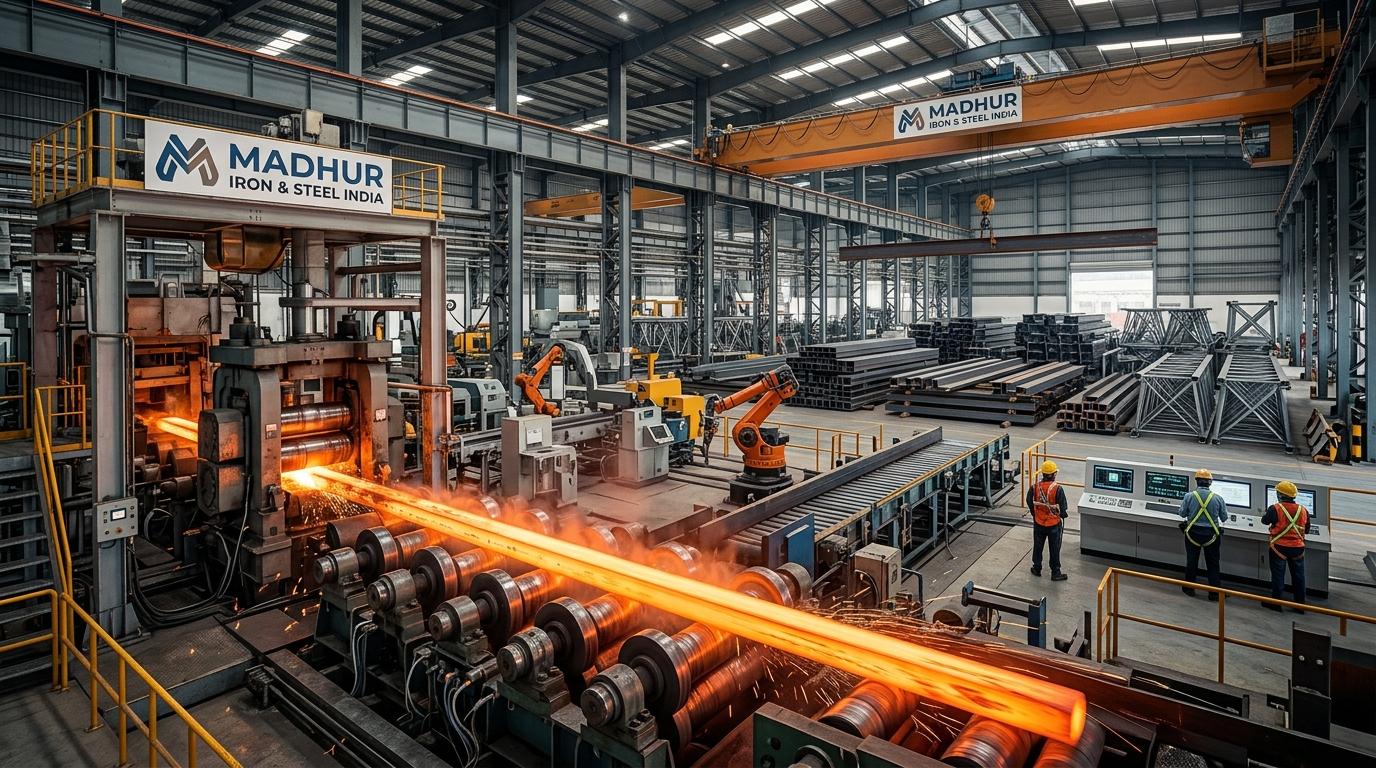
Madhur Iron & Steel (India) Limited, a Bhilai-headquartered structural steel manufacturing enterprise producing angles, channels, and engineered structural sections under the SARAL brand, has officially submitted its fresh Draft Red Herring Prospectus (DRHP) and Draft Abridged Prospectus to the Securities and Exchange Board of India (SEBI) on 18 September 2026. Governed under Chapter II of the SEBI ICDR Regulations, the proposed public issue comprises a 100% fresh capital issue of up to 1,00,00,000 (1.00 Crore) equity shares of face value ₹10 each, with zero Offer for Sale (OFS) secondary dilution by promoters. Proceeds are earmarked toward manufacturing capacity capex, balance sheet debt de-leveraging, and operational working capital. The proposed listing is planned on both BSE and NSE Mainboard bourses, subject to regulatory observation letters and subsequent Registrar of Companies (RoC) prospectus registration.
1. The Regulatory Milestone: Madhur Iron & Steel Submits Fresh DRHP on 18 September 2026
Marking an important capital market development in India's secondary steel and infrastructure supply sector, Madhur Iron & Steel (India) Limited formally submitted its fresh Draft Red Herring Prospectus (DRHP) and Draft Abridged Prospectus to the Securities and Exchange Board of India (SEBI) on 18 September 2026.
This filing follows an earlier regulatory submission on 23 January 2026 that was subsequently withdrawn on 9 March 2026. The refreshed submission incorporates the latest audited fiscal financials, updated operational metrics from its manufacturing plants in Bhilai, and fine-tuned capital expenditure allocations under Chapter II of the SEBI (Issue of Capital and Disclosure Requirements) Regulations, 2018.
Investors must maintain analytical precision: filing a DRHP is a preliminary statutory milestone and must never be conflated with regulatory approval, market clearance, or confirmed public bidding. The submission initiates technical scrutiny by SEBI's Corporation Finance Department and begins a mandatory 21-day public comment period.
| Statutory Parameter | DRHP Specification | Regulatory & Editorial Context |
|---|---|---|
| Corporate Entity | Madhur Iron & Steel (India) Limited | Public limited company incorporated under Indian Companies Act |
| Filing Date with SEBI | 18 September 2026 | Recorded in SEBI Public Issues Draft Filings repository |
| Regulatory Route | Chapter II, SEBI ICDR Regulations, 2018 | Mainboard Book Built Public Offering |
| Total Issue Structure | Up to 1,00,00,000 Equity Shares | 100% Pure Fresh Capital Issue |
| Offer for Sale (OFS) | Nil (Zero Shares) | Zero secondary promoter dilution |
| Equity Face Value | ₹10 per Equity Share | Standard denomination for Mainboard issues |
| Proposed Exchanges | BSE & NSE Mainboard | Dual national bourse listing |
| Price Band & Dates | To be determined post-SEBI clearance | Awaiting observation letter & RoC RHP filing |
| Book Running Lead Manager | Share India Capital Services Private Limited | Lead merchant banker managing the issue |
| Registrar to the Issue | Bigshare Services Private Limited | Official registrar handling bids & allotment |
2. Capital Architecture: 100% Fresh Issue with Zero Secondary Promoter Dilution
One of the primary evaluative criteria for equity analysts when reviewing draft offer documents is the balance between Fresh Capital Creation and Secondary Offer for Sale (OFS).
In many recent capital market transactions, prominent early-stage private equity sponsors and founding promoters utilize an initial public offering primarily as a liquidity exit mechanism. When an IPO is heavily weighted toward an OFS, the capital collected from retail, HNI, and institutional applicants flows directly into the personal bank accounts of the selling shareholders, leaving the operating company's balance sheet unchanged.
By contrast, Madhur Iron & Steel (India) Limited's proposed IPO is structured as a 100% Fresh Issue of up to 1,00,00,000 equity shares. Not a single equity share is being offloaded through an Offer for Sale.
- Direct Balance Sheet Inflow: 100% of the net proceeds (after deducting statutory issue management fees and underwriting commissions) will be credited directly to the issuer's corporate accounts.
- Net Worth Augmentation: The issuance increases the equity share capital base and bolsters overall net worth, enhancing debt-servicing ratios and borrowing capacity from commercial banking syndicates.
- Promoter Alignment: By retaining their existing equity holdings without cashing out at the draft stage, the founding promoter group demonstrates continued long-term alignment with the future operating performance of the company.
3. Stated Objects of the Issue: Capex, Working Capital & Debt Optimization
Operating within the capital-intensive metals, rolling mills, and fabricated steel products industry necessitates substantial liquidity to maintain continuous billet procurement, inventory turnaround, and mechanized rolling lines.
According to the statutory disclosure under “Objects of the Offer” in the draft prospectus, Madhur Iron & Steel plans to deploy the fresh capital proceeds across three primary operational pillars:
| Strategic Object | Operational Focus | Expected Corporate Benefit |
|---|---|---|
| Capital Expenditure (Capex) | Modernization and capacity expansion at manufacturing units in Chhattisgarh | Higher daily rolling tonnage, improved throughput, and enhanced product precision for engineered structural sections |
| Working Capital Augmentation | Financing inventories of steel scrap, sponge iron, billets, and finished structural products | Ensures uninterrupted fulfillment of large-volume institutional orders from infrastructure and transmission contractors |
| Debt De-leveraging | Prepayment or scheduled repayment of outstanding term loans and working capital credit facilities | Reduces annual interest finance costs, strengthens interest coverage ratios, and improves Profit After Tax (PAT) margins |
| General Corporate Purposes | Corporate contingencies, brand promotion, and statutory transaction expenditures | Subject to SEBI ICDR caps (maximum 25% of gross issue proceeds) |
4. Business Architecture & The “SARAL” Brand in Structural Steel
Incorporated in India and anchored in the industrial corridor of Bhilai and Raipur, Chhattisgarh, Madhur Iron & Steel (India) Limited specializes in the manufacturing, processing, and trading of diverse structural steel products. Central India is historically renowned as India's metallurgical heartland due to abundant proximity to sponge iron plants, blast furnaces, iron ore reserves, and coal power infrastructure.
The enterprise markets its primary rolled products under the established “SARAL” trade brand, serving as a dependable tier-2 supplier to engineering, procurement, and construction (EPC) contractors, industrial shed builders, and heavy electrical infrastructure entities:
- Mild Steel (MS) Angles: Equal and unequal angles used in structural framing, bridge trusses, pre-engineered buildings (PEBs), and architectural supports.
- MS Channels & Joists: Standard C-channels and I-beams critical for industrial warehousing frames, heavy transport vehicle chassis, and machinery bed foundations.
- Fabricated Transmission Tower Sections: High-tensile structural profiles engineered specifically to meet Power Grid Corporation and state transmission utility standards for cross-country electrical grids.
- Flats, Rounds & Squares: Precision-rolled merchant bars utilized across fabrication yards, railway wagons, and industrial fastener manufacturing.
5. Industry Landscape: Macro Tailwinds for Domestic Steel Fabricators
The Indian steel industry is undergoing a structural transformation supported by the central government's National Steel Policy, which targets 300 million tonnes of domestic crude steel capacity by 2030.
Several key macroeconomic drivers directly underpin demand for secondary and structural steel fabricators like Madhur Iron & Steel:
- National Infrastructure Pipeline (NIP): Massive capital allocations toward high-speed rail corridors, dedicated freight logistics expressways, airport expansions, and metro rail networks have generated sustained baseline consumption for standardized structural steel.
- Transmission & Renewable Energy Grids: India's aggressive addition of solar and wind generation parks requires thousands of kilometers of high-voltage transmission towers, directly accelerating orders for structural angles and galvanized structural profiles.
- Pre-Engineered Building (PEB) Revolution: Commercial logistics developers and warehouse operators have widely shifted from conventional RCC brick-and-mortar structures to fast-assembly PEB structural steel frames, shortening project delivery timelines and expanding secondary rolling mill demand.
6. Financial Track Record & Key Balance Sheet Indicators
In accordance with SEBI disclosure standards, the Draft Red Herring Prospectus provides audited financial statements for preceding fiscal periods. While historical figures illustrate the operational scale, investors must review both top-line growth and the underlying margin sensitivity:
| Financial Metric | Operational Character | Strategic Analytical Takeaway |
|---|---|---|
| Revenue from Operations | Derived from domestic structural steel sales and merchant trading | Demonstrates established institutional client retention across regional fabricators in central and western India |
| EBITDA & Operating Margins | Sensitive to raw material input prices (billets, scrap, and energy costs) | Operational efficiency depends on timely pass-through pricing clauses in long-term supply contracts |
| Working Capital Days | Influenced by receivables cycles from EPC contractors and raw material stocking | Working capital funding from IPO proceeds is designed to compress cash conversion days and improve liquidity |
| Gearing & Leverage | Historically supported by commercial banking credit lines and working capital limits | Debt repayment via equity infusion will lower financial leverage and expand debt service coverage ratios (DSCR) |
7. Competitive Strengths vs Key Business Risks
A balanced institutional assessment requires evaluating both the operational moats that empower the enterprise and the industry-wide risks that could constrain future profitability.
Competitive Operational Strengths
- Strategic Geographic Proximity: Located in Chhattisgarh, the company benefits from minimal freight costs on raw steel billets and sponge iron, ensuring quick procurement cycles compared to coastal or northern rolling mills.
- Established “SARAL” Brand Identity: Recognized regional distribution networks across central, eastern, and northern state markets allow steady order flow from structural fabricators.
- Versatile Product Range: Capabilities spanning basic merchant bars to heavy structural sections and transmission components insulate the business from slumps in any single end-user segment.
- 100% Fresh Issue Deployment: Utilizing fresh equity capital exclusively for business expansion and balance sheet deleveraging provides direct operational advantages over competitors carrying heavy debt loads.
Key Regulatory & Industry Risks
- Raw Material Price Volatility: Fluctuations in scrap steel, sponge iron, and billet prices can squeeze operating margins if finished goods prices cannot be adjusted immediately in the open market.
- Cyclicality of the Infrastructure Sector: Any slowdown in public sector infrastructure capital expenditure or commercial real estate construction could dampen structural steel demand.
- Geographic Concentration: A significant portion of revenue is generated from operations in central and adjoining states; regional logistical disruptions could affect timely dispatch.
- Working Capital Intensity: Extended credit cycles standard in EPC and transmission sector contracts expose the firm to cash flow timing mismatches.
8. Intermediaries & Advisory Syndicate
The statutory execution of a Mainboard initial public offering involves seasoned intermediaries who oversee regulatory compliance, book building, institutional marketing, and allotment verification:
- Book Running Lead Manager (BRLM): Share India Capital Services Private Limited has been mandated to lead the issue. The merchant banker oversees regulatory responses to SEBI queries, roadshows, and the institutional price discovery process.
- Registrar to the Issue: Bigshare Services Private Limited will serve as the official registrar. Bigshare is responsible for validating ASBA bank mandates, handling retail and HNI bidding records, processing allotment algorithms, and issuing electronic credit into demat accounts.
9. Regulatory Timeline: What Investors Should Expect Next
Because Madhur Iron & Steel is currently at the Draft Red Herring Prospectus (DRHP) stage, the transaction must navigate several mandatory regulatory milestones before opening for public bidding:
| Regulatory Milestone | Current Status / Tentative Roadmap | Statutory Requirement |
|---|---|---|
| DRHP Submission to SEBI | Completed on 18 September 2026 | Initiates statutory review and 21-day public comment period |
| SEBI Review & Observations | In Progress (Typically 30 to 75 calendar days) | SEBI issues technical observations or requests clarifications |
| RHP Registration with RoC | Tentative (Post-SEBI Observation Clearance) | Incorporates final updated financials and regulatory responses |
| Price Band & Lot Size Announcement | Minimum 2 working days prior to Issue Open | Disclosed via statutory newspaper advertisements |
| Anchor Investor Allocation | 1 working day prior to Public Opening | Up to 60% of QIB quota reserved for institutional anchors |
| Public Bidding Window (UPI ASBA) | 3 working days | Retail, HNI, and institutional bidding open |
| Basis of Allotment Finalization | T+1 day following Issue Close | Computerized lottery allocation under SEBI supervision |
| Trading Debut on BSE & NSE | T+3 days following Issue Close | Secondary market listing and price discovery at 10:00 AM |
10. Grey Market Premium (GMP) Clarification: Inactive at DRHP Stage
Retail investors frequently search for Grey Market Premiums (GMP) immediately upon hearing news of an IPO filing. It is essential to clarify the operational mechanics of the grey market:
As of 19 September 2026, there is no active or verified Grey Market Premium for Madhur Iron & Steel (India) Limited.
The grey market is an unofficial, unregulated over-the-counter forward trading arrangement. Grey market dealers only initiate quotations once the company has received SEBI clearance, filed its final Red Herring Prospectus (RHP), and officially announced its Price Band and Issue Dates. Any claims of an active GMP at the preliminary DRHP stage are speculative and unverified. Investors should always evaluate fundamental offer documents, balance sheets, and regulatory filings rather than relying on unofficial forward sentiments.
Prepare for Upcoming Mainboard Public Issues
Open a free Demat and trading account online to apply in forthcoming IPOs with instant 1-click UPI ASBA mandate approval and zero equity delivery brokerage.
11. Editorial Verdict & What Investors Should Watch Next
The fresh submission of the Draft Red Herring Prospectus by Madhur Iron & Steel (India) Limited on 18 September 2026 marks a deliberate effort to tap the domestic capital markets following its earlier withdrawal in March 2026.
The 100% fresh issue structure of 1 crore shares is inherently constructive from a corporate finance perspective, as every rupee raised will be deployed directly toward enhancing manufacturing capabilities, optimizing working capital liquidity, and retiring interest-bearing bank borrowings.
In the coming weeks, market participants should track:
- SEBI Processing Status: Weekly updates on whether SEBI has sought additional clarifications regarding historical financial adjustments or statutory plant environmental clearances.
- Observation Letter Issuance: Formal clearance by SEBI without major structural modifications.
- Valuation Multiples: The final price band when announced, comparing the company's asking Price-to-Earnings (P/E) ratio against established listed structural steel and merchant rolling peers such as Gallantt Ispat, Kamdhenu, and regional steel fabricators.
Statutory Regulatory Disclosures & Editorial Disclaimer
Digital Arthalaya (digitalarthalaya.in) is an independent financial education and market news portal. This article is published strictly for investor education and informational purposes based on public regulatory filings submitted to the Securities and Exchange Board of India (SEBI) on 18 September 2026. This content does not constitute investment advice, a financial recommendation, an underwriting solicitation, or an offer to buy or sell securities.
Filing a Draft Red Herring Prospectus (DRHP) does not guarantee that an initial public offering will receive regulatory approval or ultimately launch. Grey Market Premiums (GMP) are unofficial, unregulated, and subject to extreme volatility. Prospective investors must thoroughly read the final Red Herring Prospectus (RHP), conduct independent financial analysis, and consult a SEBI-registered financial advisor before submitting bids in any public offering.
Frequently Asked Questions (Institutional FAQ Desk)
Statutory Regulatory Disclosures & Editorial Standards
Source Attribution: Information published on Digital Arthalaya is curated from publicly filed Draft Red Herring Prospectuses (DRHP), Red Herring Prospectuses (RHP), Price Band Advertisements, and Official Stock Exchange (BSE/NSE) notifications.
Non-Advisory Mandate & Risk Warning: Digital Arthalaya is strictly an independent financial education portal and is not a SEBI-registered investment advisor or stock broker. IPO bidding and equity trading involve market risk, including potential loss of principal. Readers must conduct their own independent due diligence and read all offer documents carefully before making investment commitments.