What is MTF in Stock Market? Meaning, How Margin Trading Works, Charges & Rules Explained
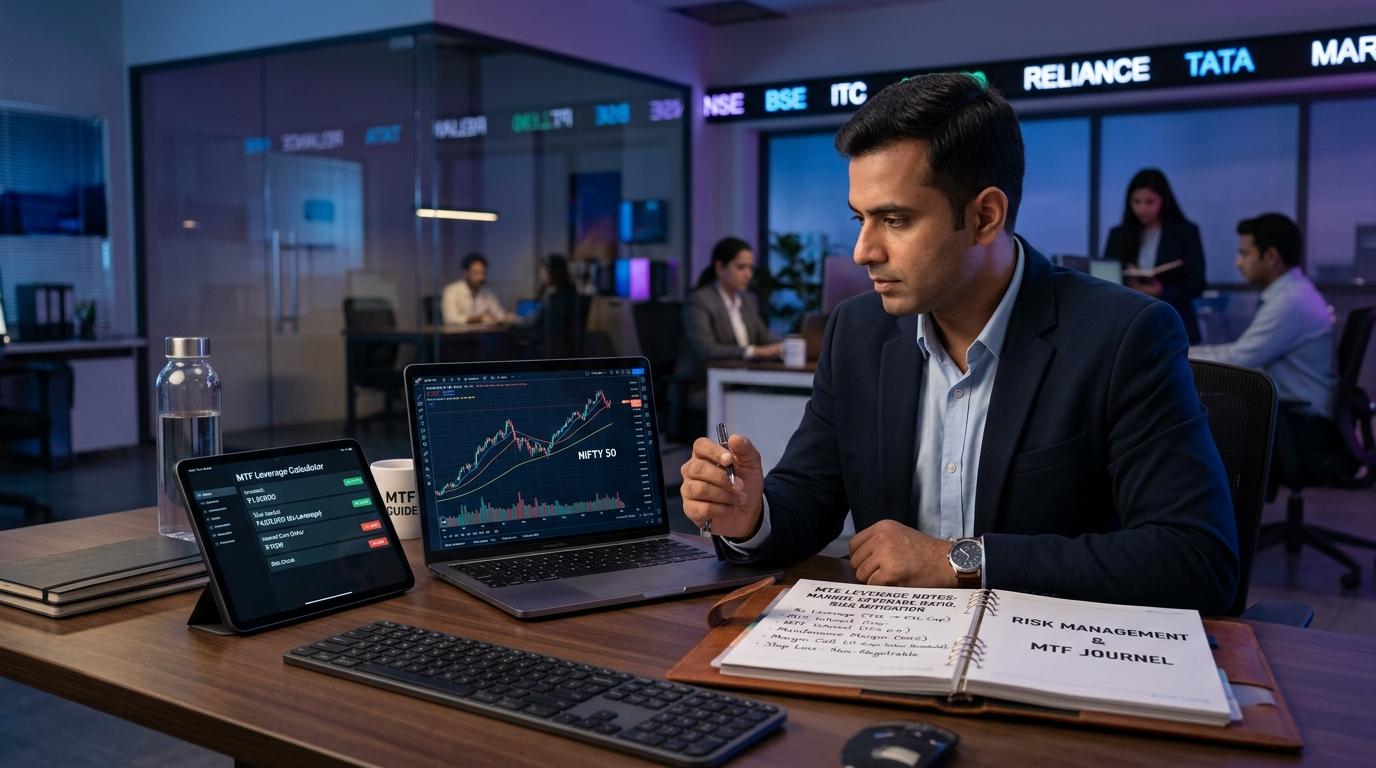
Margin Trading Facility (MTF) is an official, SEBI-regulated financial product that allows stock market investors to purchase approved delivery shares by paying only a fraction of the total purchase value (upfront margin between 20% and 50%), while the registered stockbroker finances the remaining amount at a pre-agreed daily interest rate. Unlike intraday trading (MIS), which mandates automatic squaring off by 3:15 PM, MTF positions can be held for days, weeks, or up to 365 days, provided the investor maintains the required maintenance margin and pays accrued interest. Governed by strict SEBI master circulars, MTF is restricted exclusively to liquid Group I securities and requires mandatory electronic margin pledge authorization via CDSL or NSDL OTP by T+1 settlement day.
1. What is MTF in the Stock Market? Core Definition & Overview
In traditional equity delivery investing (Cash & Carry or CNC), you can only buy shares equivalent to the exact cash balance sitting in your trading account. If you have ₹25,000, you can purchase exactly ₹25,000 worth of shares.
However, what if you spot a compelling multi-week swing trading opportunity or a blue-chip company reporting record earnings, but you do not have sufficient immediate liquidity? This is where the Margin Trading Facility (MTF) comes into play.
Margin Trading Facility (MTF) is an official, SEBI-regulated leverage product that enables investors to buy eligible delivery shares by paying only a fraction of the total trade value (known as Upfront Margin), while the stockbroker lends the remaining capital.
To understand MTF intuitively, consider the analogy of buying a home with a bank loan:
- When buying a ₹50 Lakh apartment, you pay a 20% down payment (₹10 Lakh) from your savings, and the housing finance company provides an 80% home loan (₹40 Lakh). The property papers remain mortgaged with the bank until the loan is cleared.
- Similarly, under MTF, if you want to buy ₹1,00,000 worth of blue-chip shares, you put down 25% (₹25,000) as margin, and your broker finances the remaining 75% (₹75,000). The purchased shares are held in electronic lien via a SEBI-mandated margin pledge until you sell the shares or pay off the borrowed cash.
2. How Does Margin Trading Facility Work? A Realistic Example
Let us examine the operational mechanics of an MTF transaction through a concrete numerical case study:
Suppose an investor identifies a swing trading breakout in a leading enterprise stock trading at ₹1,000 per share and wishes to purchase 100 shares (Total Transaction Value: ₹1,00,000):
- Upfront Margin Deployment: The stock requires a 25% margin (providing 4x leverage). The investor pays ₹25,000 from their trading balance (or pledges existing Demat shares as collateral).
- Broker Loan Financing: The stockbroker finances the remaining ₹75,000 to complete the exchange purchase on the National Stock Exchange (NSE).
- Mandatory OTP Pledge: On the evening of trade day (T-Day) or morning of settlement day (T+1), the investor receives an SMS and email from the depository (CDSL or NSDL). The investor completes a 1-minute OTP authentication to create a legal margin pledge in favor of the broker.
- Daily Interest Accrual: The broker charges daily interest on the funded ₹75,000 loan (e.g., at 12% per annum, which equals ₹24.65 per day).
- Exit & Settlement: After 20 calendar days, the stock rises by 10% to ₹1,100, and the investor sells the 100 shares for ₹1,10,000:
- Gross Selling Value: ₹1,10,000
- Less Broker Loan Principal Repayment: -₹75,000
- Less Accrued Interest (20 days × ₹24.65): -₹493
- Net Payout to Investor: ₹34,507
- Net Profit Realized on ₹25,000 Capital: +₹9,507 (+38.0% return on invested capital in 20 days)
| Scenario (Stock Investment: ₹2,00,000) | Normal Delivery (CNC / 100% Cash) | MTF Delivery (25% Margin / 4x Leverage) |
|---|---|---|
| Investor Own Capital Deployed | ₹2,00,000 | ₹50,000 |
| Broker Funded Loan Portion | ₹0 (No borrowing) | ₹1,50,000 |
| Stock Rises by 10% in 30 Days (Profit) | +₹20,000 | +₹20,000 |
| Broker Interest Cost (30 Days @ 12% p.a.) | ₹0 | -₹1,479 (₹1,50,000 × 12% × 30/365) |
| Net Profit Realized | ₹20,000 | ₹18,521 |
| Net Return on Investor's Capital | +10.0% | +37.04% (Amplified 3.7x) |
| -- Downside Scenario: Stock Falls by 10% | -₹20,000 (-10.0% Capital Loss) | -₹21,479 (-43.0% Capital Loss + Margin Call) |
3. MTF vs Normal Delivery (CNC) vs Intraday (MIS): Key Differences
Understanding where MTF fits into the retail product landscape is crucial for sound trade structuring:
| Feature / Parameter | Margin Trading Facility (MTF) | Intraday Trading (MIS) | Normal Equity Delivery (CNC) |
|---|---|---|---|
| Capital Requirement | Partial (20% to 50% Margin) | Small (20% Upfront Margin) | 100% Upfront Cash |
| Purchasing Power (Leverage) | Up to 3x to 5x | Up to 5x | 1x (Zero Leverage) |
| Permissible Holding Period | Days, weeks, or months (up to 365 days) | Must exit before 3:15 PM today | Unlimited (Decades / Lifetime) |
| Borrowing Interest Cost | Yes (9.99% to 18% p.a. calculated daily) | None | Zero Interest |
| Overnight Market Risk | Yes (Carries gap-down risk) | None (Positions closed intraday) | Yes (Absorbed by long-term horizon) |
| SEBI Margin Pledge Mandate | Mandatory OTP pledge within T+1 | Not applicable | Direct credit to Demat account |
| Margin Call Risk | Yes (Forced square-off if price drops) | Real-time stop-out / square-off | Zero (Shares cannot be liquidated) |
4. Eligible Securities: Which Stocks Can You Buy Under MTF?
Under SEBI guidelines, stockbrokers are legally prohibited from offering MTF on speculative, highly illiquid, or high-risk scrips. The regulator establishes strict risk filters:
- Restricted Strictly to Group I Securities: MTF can only be provided on equity shares classified by the exchanges as Group I securities. These represent companies that trade on at least 80% of trading days and demonstrate an annualized volatility (mean plus standard deviation) within regulatory limits.
- Eligible Instruments:
- Large-cap blue-chip equities (e.g., NIFTY 50 and SENSEX 30 constituents)
- Prominent high-liquidity mid-cap corporations
- Specified liquid Index ETFs (such as Nifty 50 ETFs, Bank Nifty ETFs, and Gold ETFs)
- Strictly Excluded Securities: Small and Medium Enterprise (SME) IPO shares, illiquid micro-caps, Z-group non-compliant stocks, trade-to-trade (T2T) surveillance scrips, and penny stocks are strictly banned from MTF funding.
5. How is MTF Interest Calculated? The Real Cost of Borrowing
While stockbroker marketing banners highlight "Buy 4x shares", smart traders evaluate the exact interest burden before executing trades.
Daily Interest Formula:
Daily MTF Interest = (Funded Amount × Annual Interest Rate %) ÷ 365
- Typical Market Rates: Most Indian discount and full-service brokers charge between 9.99% and 18% per annum depending on client capital tiers.
- At 12% p.a., the daily interest rate is approximately 0.0328% per day (₹32.80 per day per ₹1,00,000 borrowed).
- At 18% p.a., the daily interest rate is approximately 0.0493% per day (₹49.30 per day per ₹1,00,000 borrowed).
- Calculation Basis: Interest is calculated on calendar days (including Saturdays, Sundays, and exchange trading holidays) because the broker's capital remains tied up over non-trading days.
- Interest Drag in Sideways Markets: If you hold a ₹2,00,000 MTF position (borrowing ₹1,50,000 at 15% p.a.) for 6 months while the stock trades sideways and gains 0%, you will still owe the broker ₹11,095 in pure interest, converting a flat position into a net loss.
6. The Mandatory CDSL/NSDL Margin Pledge Process
One of the most frequent reasons beginner MTF traders face unexpected account penalties is failing to understand SEBI's Electronic Margin Pledge Mandate:
- When you purchase shares under MTF, SEBI mandates that the shares must be legally pledged in favor of the stockbroker as collateral for the funded loan.
- The OTP Authentication Window: On trade day (T-Day) or settlement morning (T+1), your central depository (CDSL or NSDL) will send an automated SMS and email containing a secure verification link.
- Client Action Required: You must click the link, enter your PAN or Demat BO-ID, review the listed shares and ISIN quantities, and authenticate the pledge using the 6-digit OTP sent to your Aadhaar-linked mobile number.
- The Statutory Cut-Off: The pledge must be completed before the depository deadline (typically before 9:00 PM on T-Day or 11:00 AM on T+1, depending on broker policy).
- Failure Consequence: If you fail to authorize the OTP pledge in time, SEBI regulations prohibit the broker from carrying the unpledged loan. The broker's risk management system will automatically square off your shares at the market opening on T+2 day, potentially locking in losses.
7. Understanding Margin Calls & Forced Auto Square-Off
Leverage works as a double-edged sword: it magnifies gains when stocks surge, but accelerates capital erosion when prices fall.
The Maintenance Margin Threshold: When holding an MTF position, the broker monitors your Equity Margin Percentage:
Net Margin % = (Current Portfolio Value - Funded Loan Amount) ÷ Current Portfolio Value
- The Margin Call Trigger: If the purchased stock price declines significantly, your equity cushion shrinks. If your margin percentage falls below the broker's statutory maintenance margin (typically 20% to 25%), the broker issues a formal Margin Call via email and SMS notification.
- Resolution Window: You are granted a grace period (usually 24 to 48 hours) to rectify the shortfall by either:
- Transferring fresh cash funds into your trading ledger.
- Pledging additional approved collateral shares from your existing Demat holdings.
- Forced Auto Square-Off (Liquidation): If you fail to deposit fresh margin within the stipulated deadline, or if the stock crashes precipitously causing margin to breach the hard liquidation threshold (e.g., falling below 15%), the broker's automated risk desk will sell sufficient shares on the open market to recover the loan, without requiring your consent.
8. MTF vs Futures & Options (F&O): Why Swing Traders Prefer MTF
Many positional traders who previously traded stock futures or options have transitioned to MTF due to its distinct structural advantages:
- Zero Time Decay (No Theta Risk): In Options buying, every passing day destroys contract premium value even if the stock stays flat. With MTF, you hold actual cash-market equity shares; there is zero time decay.
- No Monthly Expiry Pressures: Stock futures contracts expire on the last Thursday of every month, forcing traders to either book losses or incur expensive rollover spreads. MTF positions can be held seamlessly across months without rolling contracts.
- Corporate Actions & Dividends: When holding MTF shares, you remain the beneficial owner in the depository. You receive all corporate dividends, bonus shares, and stock splits directly, offsetting a portion of your borrowing interest costs.
9. 5 Golden Rules to Use MTF Safely Without Risking Account Ruin
Professional traders who successfully utilize MTF adhere to strict risk management protocols:
- Never Use MTF for Long-Term Buy-and-Hold: MTF is designed for short-to-medium term swing trading (1 week to 3 months). Holding an MTF position for 2 to 3 years will result in interest compounding (15% p.a. over 3 years equals 45%+ in borrowing fees), wiping out corporate capital gains.
- Strict Pre-Defined Stop-Loss Orders: Because leverage amplifies losses by 3x to 4x, never enter an MTF position without a hard stop-loss. Exiting a 3% stock decline limits your capital loss to ~12%, preventing a disastrous margin call.
- Cap Exposure to 30%–50% of Your Portfolio: Never deploy 100% of your account into MTF trades simultaneously. Maintain a healthy cash buffer in your trading account to absorb sudden market corrections without triggering forced liquidation.
- Stick to Large-Cap Heavyweights: Limit MTF usage to resilient NIFTY 50 and SENSEX 30 companies with deep institutional order books and low beta volatility. Avoid high-beta mid-caps that can gap down 10% on unexpected negative news.
- Always Complete the Depository OTP Pledge Immediately: Authorize the CDSL/NSDL margin pledge link the very moment you receive the notification on trade day to prevent automated square-offs on T+2.
Trade MTF with Competitive Rates & Zero Equity Delivery Brokerage
Open a free Demat and trading account in 5 minutes. Unlock up to 4x leverage on 1,000+ approved stocks with instant digital margin pledge authorization and transparent daily interest rates.
10. Editorial Summary & Recommended Investor Actions
The Margin Trading Facility (MTF) is a powerful, institutional-grade mechanism that bridges the gap between low-capital constraints and high-conviction swing trading opportunities. When applied to high-quality blue-chip stocks with disciplined stop-losses and short holding horizons, it enables disciplined traders to optimize their Return on Capital (ROC).
However, leverage demands respect. Beginners should first master trading with 100% cash delivery before activating MTF, always calculate daily interest costs upfront, and never ignore a depository margin pledge notification.
Statutory Regulatory Disclosures & Editorial Disclaimer
Digital Arthalaya (digitalarthalaya.in) is an independent financial education and market research platform. This guide is published strictly for investor education and awareness based on regulatory circulars issued by the Securities and Exchange Board of India (SEBI), National Stock Exchange (NSE), and Central Depository Services Limited (CDSL).
This content does not constitute financial advice, an investment recommendation, an endorsement of leverage, or a solicitation to buy or sell securities. Margin trading carries inherent leverage risk, including the risk of losing more than your initial margin capital and incurring borrowing interest liabilities. Investors must thoroughly review their broker's Margin Trading Agreement and consult a SEBI-registered financial advisor before utilizing leverage facilities.
Frequently Asked Questions (Institutional FAQ Desk)
Educational & Regulatory Disclosures
Source Attribution: This masterclass educational guide is produced strictly for investor awareness and capital markets literacy in alignment with SEBI Investor Education and Protection Fund (IEPF) guidelines.
Non-Advisory Mandate & Risk Warning: Digital Arthalaya is strictly an independent financial education portal and is not a SEBI-registered investment advisor or stock broker. IPO bidding and equity trading involve market risk, including potential loss of principal. Readers must conduct their own independent due diligence and read all offer documents carefully before making investment commitments.