Top 10 Defence Stocks in India: Order Books, PSUs & Export Audit
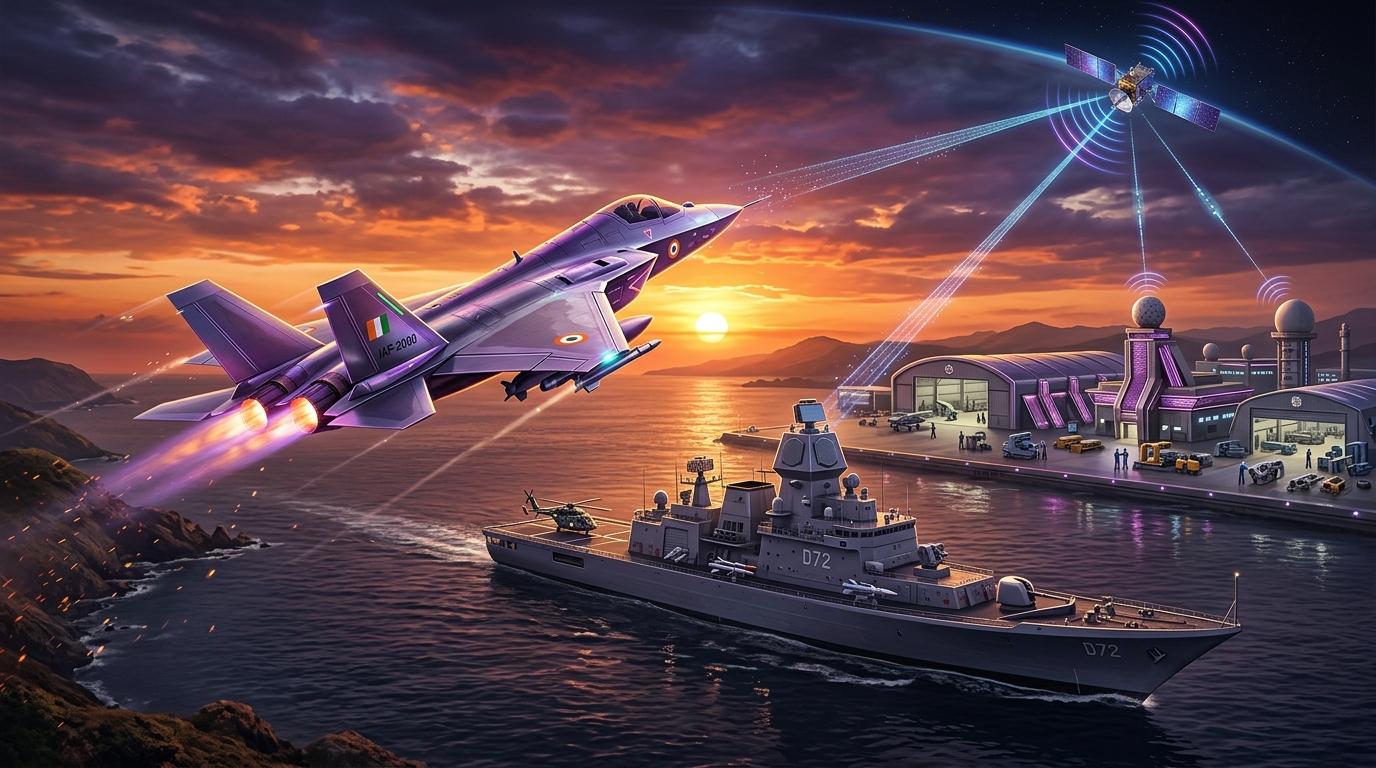
India's defence manufacturing sector is undergoing a multi-year structural transformation. Driven by the central government's Aatmanirbhar Bharat initiative, over 75% of the Defence Capital Acquisition Budget is legally reserved for domestic manufacturers, reinforced by 5 Positive Indigenisation Lists banning foreign imports of over 5,000 military items. With multi-year order backlogs stretching 3 to 6 years into the future, pristine debt-free balance sheets, and surging global military exports exceeding ₹21,000 Crores, listed defence PSUs and private engineering champions have emerged as high-conviction long-term wealth creators.
India’s defence manufacturing sector is undergoing one of the most consequential structural re-ratings in modern Indian financial history. For decades following independence, India ranked consistently among the world's largest importers of conventional military arms and weapon systems, procuring fighter jets, naval frigates, radar arrays, and artillery from foreign original equipment manufacturers (OEMs).
However, the Government of India's aggressive push toward "Aatmanirbhar Bharat" (Self-Reliant India) and the enforcement of the Defence Acquisition Procedure (DAP 2020) has fundamentally altered this paradigm. By mandating domestic procurement quotas, issuing phased import embargoes on over 5,000 military items, and actively promoting bilateral defence exports across Southeast Asia, the Middle East, and Africa, India has transformed into a high-technology defence designing and exporting nation. In this comprehensive 2026 sector guide, we audit the top 10 listed defence stocks on the NSE and BSE, examine multi-year order backlogs, and provide a disciplined valuation framework for long-term investors.
1. The Four Policy Engines Driving India's Multi-Year Defence Boom
To understand why domestic defence companies enjoy unprecedented revenue predictability, investors must examine the core regulatory interventions enacted by the Ministry of Defence (MoD):
- 1. Earmarked 75%+ Domestic Capital Budgets: In successive Union Budgets, over 75% of the total modernization capital acquisition budget is legally reserved for procurement from domestic Indian manufacturers under 'Buy (Indian-IDDM)' and 'Buy (Indian)' categories, directing over ₹1.25 Lakh Crore annually into the domestic ecosystem.
- 2. Positive Indigenisation Lists (5,000+ Phased Import Embargoes): The Department of Military Affairs (DMA) has notified five successive Positive Indigenisation Lists comprising over 5,000 military platforms, major equipment systems, and ammunition types that the Armed Forces are legally prohibited from importing from foreign vendors.
- 3. Explosive Growth in Defence Exports: Indian defence exports have scaled from ~₹1,500 Crores in 2014 to over ₹21,083 Crores in FY24–FY25, with the central government targeting ₹50,000 Crores by 2029. Marquee global deals include the $375 Million BrahMos missile export to the Philippines and Pinaka rocket artillery systems to Armenia.
- 4. Dedicated Defence Industrial Corridors: Integrated industrial corridors in Uttar Pradesh and Tamil Nadu provide shared testing ranges, common machining facilities, and aerospace park infrastructure for private MSMEs and tier-1 sub-contractors.
2. Master Benchmark Table: Top 10 Defence Stocks in India (2026 Financial Audit)
The comparative matrix below benchmarks the 10 leading listed defence companies across ownership, military domains, order backlog metrics, and flagship platforms:
| Company Name | Ownership | Military Domain | Unexecuted Order Book | Book-to-Bill Ratio | Trailing ROE (%) | Flagship Defence Platforms |
|---|---|---|---|---|---|---|
| Hindustan Aeronautics (HAL) | Defence PSU | Military Aerospace & Avionics | ₹94,000+ Cr | ~3.2x | 26% – 30% | LCA Tejas Mk1A, Prachand LCH, Su-30 MKI upgrades, GE-414 engines |
| Bharat Electronics (BEL) | Defence PSU | Radars, EW & Missile Electronics | ₹76,000+ Cr | ~3.8x | 24% – 28% | Akash missile systems, QRSAM electronics, naval tactical combat suites |
| Mazagon Dock Shipbuilders (MDL) | Defence PSU | Warships & Submarines | ₹40,000+ Cr | ~4.2x | 28% – 34% | Project 15B guided destroyers, Project 17A frigates, Kalvari Scorpene subs |
| Cochin Shipyard (CSL) | Defence PSU | Aircraft Carriers & Patrol Craft | ₹22,000+ Cr | ~5.5x | 16% – 20% | INS Vikrant IAC-1 maintenance, Next-Gen Corvettes, ASW shallow craft |
| Bharat Dynamics (BDL) | Defence PSU | Guided Missiles & Torpedoes | ₹19,000+ Cr | ~6.2x | 15% – 18% | Astra beyond-visual-range missiles, Akash SAM, Konkurs-M ATGMs |
| Solar Industries India | Private Sector | Warheads, Propellants & Drones | ₹4,500+ Cr | ~1.4x | 24% – 28% | Pinaka multi-barrel rockets, loitering munition drones, military warheads |
| Bharat Forge (Kalyani) | Private Sector | Artillery Guns & Armored Vehicles | ₹5,200+ Cr (Def) | ~2.0x | 14% – 17% | ATAGS 155mm advanced towed artillery, Kalyani M4 armored vehicles |
| Zen Technologies | Private Sector | Anti-Drone CUAS & Simulators | ₹1,400+ Cr | ~3.2x | 30% – 36% | Counter-Unmanned Aerial Systems (CUAS), live fire combat simulators |
| Data Patterns India | Private Sector | Defence Radars & Avionics | ₹1,100+ Cr | ~2.1x | 18% – 22% | Tejas cockpit displays, EW radar processors, satellite sub-systems |
| Paras Defence & Space | Private Sector | Defence Optics & EMP Protection | ₹800+ Cr | ~2.8x | 12% – 15% | Submarine optronics, military thermal imaging, EMP shielded racks |
3. The Powerhouses: Defence Public Sector Undertakings (DPSUs)
State-owned defence enterprises form the backbone of India's strategic defense capabilities, backed by sovereign client relationships, debt-free balance sheets, and substantial treasury cash reserves:
- Hindustan Aeronautics Limited (HAL): The undisputed aerospace monolith. HAL manufactures the indigenous LCA Tejas Mk1A fighter jet, Prachand light combat helicopters, and HTT-40 basic trainers. Its agreement to co-produce GE-414 jet engines in India with an 80% technology transfer represents a historic manufacturing milestone.
- Bharat Electronics Limited (BEL): India's premier defence electronics supplier. BEL manufactures radar arrays, electronic warfare (EW) suites, tactical communications, and night-vision sights. It supplies electronic guidance payloads for nearly every missile system deployed by the Indian Armed Forces.
- Mazagon Dock Shipbuilders (MDL): India's leading naval shipbuilder, constructing stealth guided-missile destroyers (Project 15B), multi-mission stealth frigates (Project 17A), and diesel-electric attack submarines (Scorpene Kalvari-class).
- Cochin Shipyard (CSL): Renowned for constructing India's first indigenous aircraft carrier (INS Vikrant IAC-1), Cochin Shipyard manages carrier refit cycles alongside commercial high-margin international shipbuilding contracts.
- Bharat Dynamics Limited (BDL): The sole manufacturer of surface-to-air missiles (Akash), air-to-air missiles (Astra), and anti-tank guided missiles (ATGM) for the Indian Armed Forces.
4. Private Sector Disruptors: Agile Specialists & Sub-System Champions
While DPSUs assemble large strategic platforms, agile private engineering firms command proprietary intellectual property (IP) and rapid international export capabilities:
- Solar Industries India: Developed indigenous propellants and rocket warheads for the Pinaka multi-barrel rocket launcher system. Solar Industries is also pioneering indigenous loitering munitions (Nagastra kamikaze drones) for counter-insurgency operations.
- Bharat Forge (Kalyani Group): Built the indigenous 155mm Advanced Towed Artillery Gun System (ATAGS) capable of firing up to 48 km. Bharat Forge also manufactures the Kalyani M4 multi-role armored vehicle deployed along high-altitude borders.
- Zen Technologies: Dominates combat training simulators and Counter-Unmanned Aerial Systems (CUAS). With modern combat increasingly contested by autonomous drone swarms, Zen’s patented radar, RF, and soft/hard-kill drone jammers command global export demand.
- Data Patterns India: A specialized electronic hardware and software developer with in-house design capabilities spanning military radars, avionics processors, and electronic warfare systems for fighter jets and missile batteries.
- Paras Defence & Space Technologies: Specializes in precision defence optics, submarine periscopes, military night vision, and electromagnetic pulse (EMP) shielding.
5. Valuation & Financial Health: How to Analyze a Defence Stock
When analyzing listed defence equities, investors must look beyond traditional P/E ratios and evaluate fundamental industry dynamics:
- Book-to-Bill Ratio: Compares unexecuted order backlogs to trailing annual revenue. A Book-to-Bill ratio above 3.0x guarantees uninterrupted revenue growth across macroeconomic cycles.
- Negative Working Capital Cycles: Defence procurement contracts typically mandate 10% to 15% upfront mobilization advances upon contract signing, generating substantial treasury interest income for companies like BEL and HAL.
- Indigenous Bill of Materials (BoM): Track the domestic content percentage. Higher indigenisation protects gross margins from foreign exchange volatility and international supply chain blockades.
- Export Share of Revenue: International foreign military sales (FMS) command significantly higher EBITDA margins (often 25%–35%) compared to capped cost-plus domestic defense contracts.
6. Sector Risks & Headwinds: What Prudent Investors Must Watch
While the long-term outlook for defence manufacturing remains structurally robust, investors must remain vigilant regarding sector-specific risks:
- Extended Platform Gestation Timelines: Complex military platforms can take 5 to 10 years to reach full-rate serial production. Execution delays can attract contractual liquidated damage penalties.
- Critical Foreign Component Dependencies: High-thrust jet engines (e.g. GE-404/414) and advanced specialized military microchips remain dependent on foreign OEM export clearances.
- Elevated Valuation Multiples: Following historic multi-year stock rallies, several defence equities trade at P/E multiples above 45x to 75x, leaving minimal margin of safety if quarterly execution slows.
7. How Beginners Should Build a Defence Sector Portfolio
Investors looking to capitalize on India's defence boom should maintain a disciplined allocation strategy:
- Core Blue-Chip Anchors (60%–70%): Allocate to dominant, cash-rich DPSUs (HAL, BEL, Mazagon Dock) that possess multi-year order books, strong dividend yields, and sovereign backing.
- High-Growth Satellites (30%–40%): Select agile private innovators (Solar Industries, Bharat Forge, Zen Technologies) that lead high-margin export markets and specialized technologies like anti-drone warfare.
To begin building your equity portfolio, consult our How to Invest in Stocks for Beginners Guide, explore the Top AI Stocks in India Guide, and select the optimal trading platform with our Best Trading Apps in India Benchmark.
8. Statutory Regulatory References & Official Frameworks
Defence procurement procedures, indigenisation mandates, and listed company disclosures are governed by statutory regulatory frameworks:
- Ministry of Defence (MoD) — Department of Defence Production: Official policies governing the Defence Acquisition Procedure (DAP 2020) and Positive Indigenisation Lists at MoD Portal.
- Department of Defence Production (DDP Dashboard): Official government portal tracking monthly domestic defence production and international export milestones at DDP Dashboard.
- National Stock Exchange of India (NSE India): Nifty India Defence Index methodology, constituent weightages, and company filings at NSE India.
Frequently Asked Questions (Institutional FAQ Desk)
Educational & Regulatory Disclosures
Source Attribution: This masterclass educational guide is produced strictly for investor awareness and capital markets literacy in alignment with SEBI Investor Education and Protection Fund (IEPF) guidelines.
Non-Advisory Mandate & Risk Warning: Digital Arthalaya is strictly an independent financial education portal and is not a SEBI-registered investment advisor or stock broker. IPO bidding and equity trading involve market risk, including potential loss of principal. Readers must conduct their own independent due diligence and read all offer documents carefully before making investment commitments.