IPO in India (2026): Master Guide to Mainboard & SME Issues, Rules & Allotment | DA
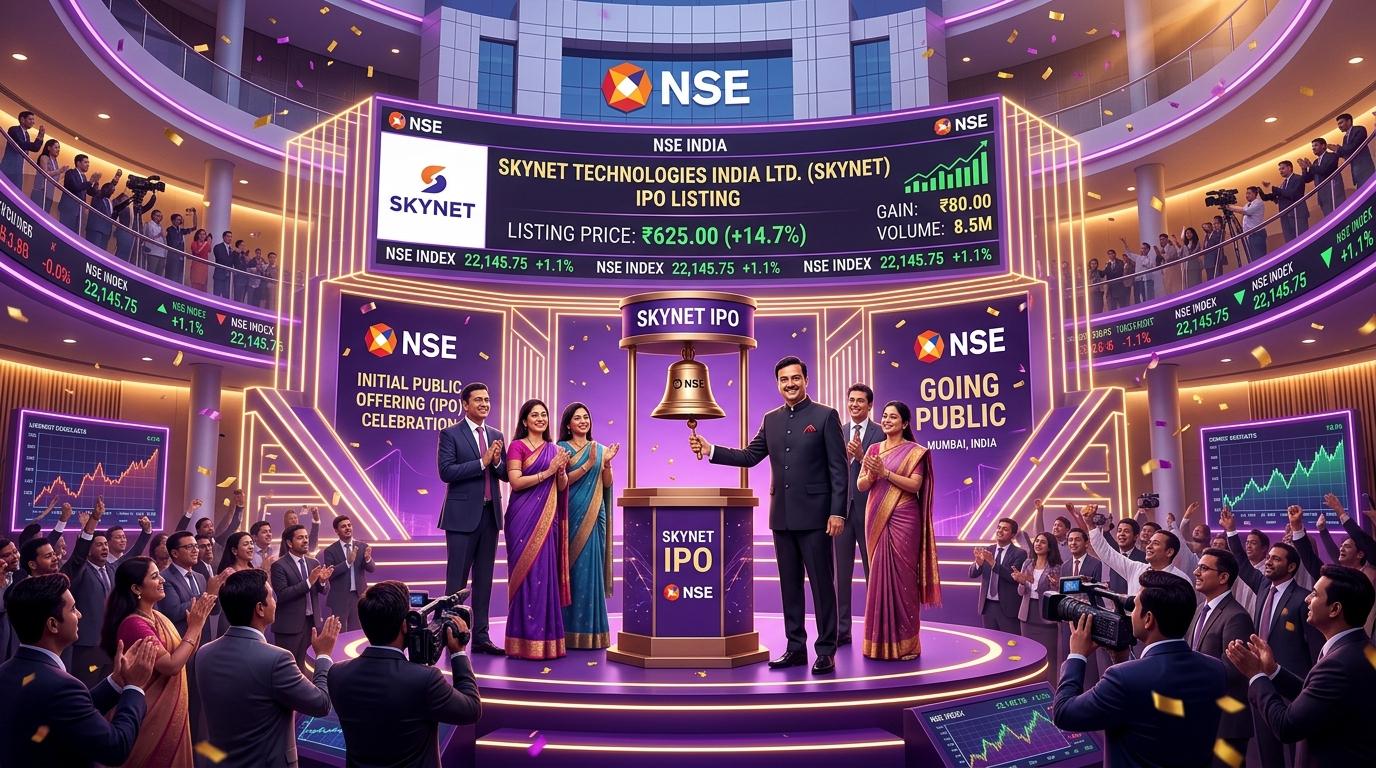
An Initial Public Offering (IPO) is the institutional cornerstone of India's primary capital markets, allowing privately held corporations to raise equity capital from institutional, high-net-worth, and retail investors while establishing public price discovery on the BSE and NSE. The modern Indian IPO ecosystem operates under the strict regulatory oversight of the Securities and Exchange Board of India (SEBI) ICDR Regulations, featuring mandatory T+3 day settlement, electronic UPI ASBA bidding up to ₹5,00,000, proportionate computerized lottery allocations for oversubscribed retail tranches, and clear post-Budget 2024 capital gains taxation (20% STCG under Section 111A). This institutional guide provides the authoritative operational framework for understanding Mainboard and SME public offerings, offer documents, book building, and allotment verification.
1. What is an IPO? Capital Formation & The Transition from Private to Public Enterprise
An Initial Public Offering (IPO) is the primary institutional mechanism through which an unlisted private company or state-owned public enterprise issues equity shares to institutional, high-net-worth, and retail investors for the first time.
In doing so, the issuer transforms from a privately held entity—funded by founders, angel investors, venture capital, or sovereign promoters—into a publicly traded joint-stock corporation listed on recognized national bourses such as the National Stock Exchange of India (NSE) and BSE Limited.
For corporate issuers, an IPO serves as the ultimate engine of long-term capital formation. It provides liquid market currency, enables debt rationalization, funds large-scale capital expenditure (capex), and provides an institutional valuation benchmark. For public market investors, initial public offerings provide ground-floor access to high-growth enterprises before they are absorbed into broad benchmark indices like the Nifty 50 or BSE Sensex.
In India, the primary market ecosystem is governed by the Securities and Exchange Board of India (SEBI) under the comprehensive framework of the SEBI (Issue of Capital and Disclosure Requirements) Regulations, 2018 (ICDR Regulations). The Indian primary market has evolved into one of the most efficient and technologically advanced capital-raising environments globally, operating on a mandatory T+3 settlement cycle with real-time electronic fund-blocking via UPI ASBA.
2. Capital Structure Mechanics: Fresh Issue of Shares vs. Offer for Sale (OFS)
When evaluating an initial public offering, the single most critical structural element to inspect in the Red Herring Prospectus (RHP) is the composition of the capital being raised. Every public issue is comprised of either a Fresh Issue, an Offer for Sale (OFS), or a hybrid combination of both:
1. Fresh Issue of Equity Shares
- Equity Expansion: The company creates and issues brand-new equity shares, expanding its overall paid-up equity base.
- Corporate Balance Sheet Inflow: The gross proceeds (net of issue expenses) flow directly into the corporate bank account.
- Growth Utilization: Funds are deployed toward tangible corporate objectives, such as setting up manufacturing facilities, funding R&D, retiring expensive bank debt, or financing strategic working capital.
- Investor Impact: Increases total share count (diluting existing per-share metrics), but strengthens enterprise solvency and book value.
2. Offer for Sale (OFS)
- Zero Balance Sheet Inflow: Existing promoters, private equity (PE), venture capital (VC) funds, or government entities offload their pre-issue shares.
- No Capital Inflow for Issuer: The company receives zero capital from the OFS component; proceeds flow directly to the selling shareholders.
- No Equity Dilution: Paid-up share capital remains unchanged; it is purely a secondary transfer of ownership from private hands to public shareholders.
- Investor Impact: Essential to evaluate whether promoters are cashing out entirely or merely providing regulatory minimum public shareholding (MPS) liquidity.
3. Mainboard IPO vs. SME IPO: Institutional Framework & Eligibility Comparison
The Indian primary market is bifurcated into two distinct regulatory platforms: the Mainboard (managed by BSE and NSE) for mature, large-scale enterprises, and the SME Platform (BSE SME and NSE Emerge) designed to facilitate capital access for small-to-medium growth enterprises:
| Regulatory Parameter | Mainboard IPO (BSE / NSE) | SME Platform IPO (NSE Emerge / BSE SME) |
|---|---|---|
| Minimum Post-Issue Paid-up Capital | ₹10.00 Crore (Minimum) | Up to ₹25.00 Crore (Maximum ceiling) |
| Regulatory Scrutiny Authority | Directly reviewed and cleared by SEBI | Reviewed and vetted directly by the Stock Exchange |
| Minimum Application Lot Commitment | ~₹14,000 to ₹15,000 per retail lot | ~₹1,00,000 to ₹1,40,000 per application lot |
| Post-Listing Secondary Trading Units | Liquid trading in 1 single share increments | Trading restricted strictly to fixed lot blocks (e.g., 600–2,000 shares) |
| Underwriting & Risk Mandate | Standard merchant banker underwriting (optional) | 100% Compulsory Underwriting (Merchant banker must underwrite 15% on own account) |
| Market Making Commitment | Not mandatory | Compulsory Market Maker for minimum 3 years to provide two-way liquidity |
| Financial Reporting Frequency | Mandatory Quarterly Audited / Limited Review | Half-Yearly Audited Financial Reporting permitted |
4. The Statutory IPO Lifecycle: From DRHP Filing to T+3 Stock Exchange Listing
Taking an enterprise public in India requires navigating a rigorous statutory sequence designed to ensure full disclosure, financial transparency, and fair price discovery:
| Phase & Milestone | Statutory Regulatory Event | Operational Mechanism & Market Function |
|---|---|---|
| 1. DRHP Filing | Draft Red Herring Prospectus submitted to SEBI | Public comment period for minimum 21 days; comprehensive regulatory examination of financials, litigation, and promoter track record. |
| 2. SEBI Observation Letter | Statutory clearance issued by SEBI | Issuer and Lead Managers address regulatory queries; valid for 12 months to launch public issue. |
| 3. RHP Registration | Red Herring Prospectus registered with RoC | Contains complete operational data, financials, and objectives, with issue dates and price band published in national newspapers. |
| 4. Anchor Investor Bidding (T-1) | 1 Day prior to public opening | Marquee domestic mutual funds and global sovereign funds commit large capital tranches (minimum ₹10 Cr each) at a fixed price. |
| 5. Public Bidding Window (T to T+2) | Standard 3 working days bidding period | QIB, NII, and Retail investors submit electronic bids through trading accounts and authorize UPI ASBA mandates before 5:00 PM cutoff. |
| 6. Basis of Allotment (T+1 / T+2) | Finalized by Registrar & Stock Exchange | Technical rejections cleared, oversubscription multiples tallied, and computerized lottery executed under SEBI supervision. |
| 7. Demat Credit & Lien Revocation | Within 2 working days of issue close | Shares deposited electronically into NSDL/CDSL accounts; banks release blocked funds for unallotted bidders. |
| 8. Stock Exchange Listing (T+3) | Mandatory 3rd working day post-closing | Equilibrium opening price discovered via 45-minute pre-open call auction; regular secondary market trading commences at 10:00 AM IST. |
5. Investor Categories & Quota Allocations: QIB, NII (HNI) & Retail Individual Investors (RII)
Under SEBI ICDR Regulations, public offerings are divided into statutory quotas to ensure balanced market participation across institutional, high-net-worth, and small retail investors:
| Investor Bidding Category | Standard Statutory Quota | Application Capital Limits | Statutory Allotment Methodology |
|---|---|---|---|
| Qualified Institutional Buyers (QIB) | Not more than 50% of Net Issue | Institutional scale (Crores) | Allotted on a proportionate basis; up to 60% of QIB portion may be reserved for Anchor Investors. |
| Non-Institutional Investors (NII / HNI) | Not less than 15% of Net Issue | Above ₹2,00,000 | Sub-divided: 1/3rd reserved for Small NIIs (₹2L–₹10L) and 2/3rds for Big NIIs (>₹10L); allotted via lottery for minimum lot. |
| Retail Individual Investors (RII) | Not less than 35% of Net Issue | Up to ₹2,00,000 per PAN | Computerized randomized lottery ensuring maximum number of retail applicants receive at least 1 minimum lot. |
| Employee / Shareholder Quota | Discretionary pool (typically up to 5%) | Defined in RHP | Special bidding reservation often accompanied by a statutory price discount (e.g., ₹10–₹50 per share discount). |
6. Price Discovery & Bidding Mechanics: Fixed Price vs. Book Building & The "Cut-Off" Price
In India's capital markets, initial public offerings are executed primarily via two pricing mechanisms:
- Fixed Price Issues: The issuer and merchant bankers determine a fixed price per share (e.g., ₹100.00) disclosed directly in the prospectus. Investors apply strictly at this stated figure.
- Book Building Issues (Standard): The issuer specifies a Price Band consisting of a Floor Price and a Cap Price (e.g., ₹190.00 to ₹200.00 per share). Under SEBI regulations, the spread between the floor and the cap cannot exceed 20%. Market demand determines the final clearing price.
Crucial Rule for Retail Bidders: Always Select "Cut-Off Price"
Retail Individual Investors have the statutory privilege to select the "Cut-Off Price" checkbox on their bidding console. Selecting "Cut-Off" means you agree to purchase shares at whatever final clearing price is discovered by the book-building process (almost invariably the upper price cap). If an investor manually bids at the floor price (e.g., ₹190) and institutional demand pushes the final issue price to ₹200, the application is automatically disqualified from allotment.
7. How Allotment Works: SEBI’s Computerized Lottery System Explained
One of the most misunderstood concepts in Indian equity markets is how retail allotment is determined during heavy oversubscription.
Under the revised SEBI ICDR framework, the objective of retail allotment is to ensure that the maximum possible number of unique retail applicants receive at least one minimum market lot.
- If Retail is Undersubscribed or Exactly Subscribed (1.0x): Every valid applicant receives the exact number of lots they applied for.
- If Retail is Moderately Oversubscribed (e.g., 3.0x): The total available shares in the retail quota are divided by the minimum lot size to determine the total number of allottees (N). Because applicants exceed N, an electronic, randomized computerized lottery is conducted under exchange oversight. Each successful applicant receives exactly 1 minimum lot.
- The "Multiple Lots" Myth: Applying for 13 or 14 lots in the retail category does not increase your allotment chances during high oversubscription. A retail applicant applying for 14 lots has the exact same statistical probability in the lottery as an applicant applying for 1 single lot.
8. Payment Architecture: UPI ASBA (Application Supported by Blocked Amount) Mandates
The introduction of Application Supported by Blocked Amount (ASBA) revolutionized Indian public issue processing by eliminating refund delays and transit risk:
When you apply for an IPO via your trading app (Zerodha, Groww, Upstox, Angel One) using your UPI Virtual Payment Address (VPA), your bank creates an electronic lien block on the application funds.
- Funds Remain in Your Account: The application capital never leaves your personal savings bank account during the bidding window.
- Interest Accrual Continues: The blocked money continues to earn your regular daily savings bank interest.
- Electronic Debit on Allotment: The bank debits the blocked funds only after the registrar confirms successful share allocation.
- Instant Auto-Release: If your application is unsuccessful in the lottery, the registrar sends an automated electronic clearing notice, and your bank releases the lien, restoring your usable balance immediately.
9. Taxation of IPO Listing Gains: Post-Budget 2024 STCG & LTCG Rules
Investors who sell IPO shares on listing day or hold them for long-term compounding must calculate their tax liabilities in accordance with the revised provisions introduced by the Finance Act 2024:
| Holding Period & Nature of Gain | Applicable Income Tax Section | Statutory Tax Rate (Post-Budget 2024) | Statutory Exemption / Threshold |
|---|---|---|---|
| Listing Day Gains / Short-Term (< 12 Months) | Section 111A | 20.00% (Flat Rate) | Increased from 15% to 20% effective 23 July 2024; plus 4% Health & Education Cess. |
| Long-Term Capital Gains (> 12 Months) | Section 112A | 12.50% (Flat Rate) | Gains up to ₹1,25,000 per financial year are completely tax-free; excess taxed at 12.5%. |
| Corporate Dividend Income | Income from Other Sources | Marginal Slab Rates | Taxed at investor's personal income slab; 10% TDS deducted if annual dividend exceeds ₹5,000. |
| Securities Transaction Tax (STT) | Stock Exchange Levy | 0.10% on Delivery Sale | Mandatory statutory transaction levy required to qualify for Section 111A / 112A tax rates. |
10. Statutory Registrars & Verification Console Directory
Statutory Registrars to the Issue are independent SEBI-registered financial institutions responsible for reconciling bidding applications, executing allotment lottery algorithms, and coordinating with depositories (NSDL and CDSL).
When checking public issue allotment, investors should verify their PAN status directly on the official registrar consoles:
| Statutory Registrar | Official Verification Console | Primary Market Coverage |
|---|---|---|
| MUFG Intime India (Link Intime) | Link Intime Allotment Desk | Large Mainboard & Conglomerate Offerings (Tata, Reliance, PSUs) |
| KFin Technologies Limited | KFintech IPO Status Portal | Mega Mainboard (Hyundai, LIC) & Leading Tech Startups |
| Bigshare Services Private Limited | Bigshare Online Allotment Portal | Prominent Mainboard & BSE SME Platform Offerings |
| Skyline Financial Services | Skyline RTA Allotment Console | Specialized SME & Regional Manufacturing Public Issues |
11. Statutory Regulatory Disclosures & Official Framework References
All operational guidelines, category reservation formulas, settlement timelines, and tax rates cited in this master guide are compiled directly from statutory statutory authorities:
- Securities and Exchange Board of India (SEBI): SEBI ICDR Regulations Official Framework .
- National Stock Exchange of India (NSE): NSE Primary Market Public Issues Dashboard .
- BSE Limited: BSE Public Issues & Bidding Platform .
- National Payments Corporation of India (NPCI): NPCI UPI ASBA Guidelines for Capital Markets .
- Income Tax Department of India: Central Board of Direct Taxes (CBDT) Capital Gains Tax Guidelines .
Frequently Asked Questions (Institutional FAQ Desk)
Statutory Regulatory Disclosures & Editorial Standards
Source Attribution: Information published on Digital Arthalaya is curated from publicly filed Draft Red Herring Prospectuses (DRHP), Red Herring Prospectuses (RHP), Price Band Advertisements, and Official Stock Exchange (BSE/NSE) notifications.
Non-Advisory Mandate & Risk Warning: Digital Arthalaya is strictly an independent financial education portal and is not a SEBI-registered investment advisor or stock broker. IPO bidding and equity trading involve market risk, including potential loss of principal. Readers must conduct their own independent due diligence and read all offer documents carefully before making investment commitments.