Trent Ltd Share Analysis: Zudio Economics, Moat & Valuation (2026) | DA
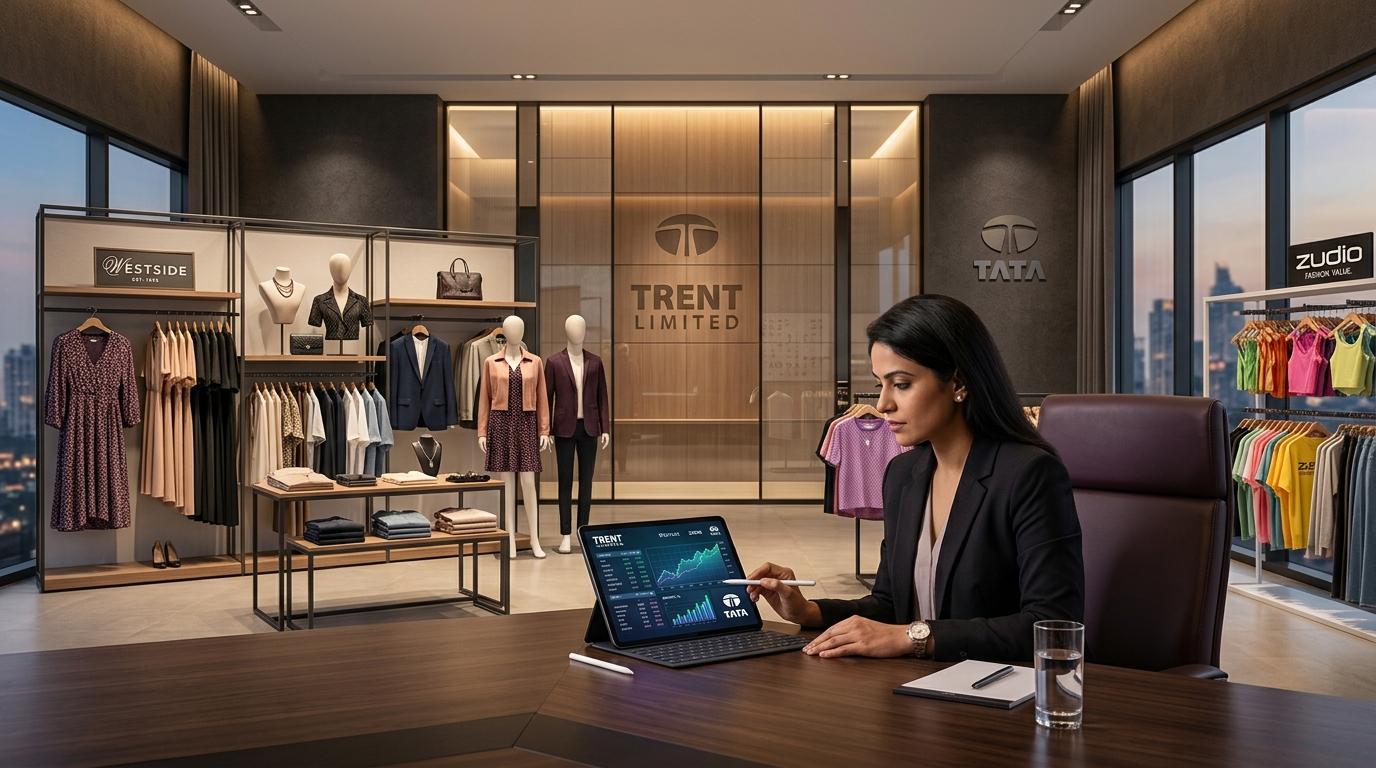
Trent Limited (NSE: TRENT), the retail flagship of the Tata Group, represents one of modern India's most extraordinary retail compounding engines. Key institutional pillars: Fast-fashion format Zudio operates 550+ stores with an agile 15-day concept-to-shelf supply chain, zero traditional advertising spend, and a 24-to-30 month store payback period. Westside delivers high 58%–62% gross margins via 100% exclusive private-label brands. With consolidated revenues expanding at 45%–50%+ CAGR, zero long-term debt, and ROCE exceeding 28%, Trent commands an elevated valuation multiple driven by rapid forward earnings compression and a multi-year retail expansion runway.
Trent Limited (NSE: TRENT / BSE: 500251), the retail flagship of the storied Tata Group, stands as one of the most extraordinary long-term wealth compounding masterclasses in modern Indian corporate history. Over the past five years, while conventional apparel brands and department stores struggled with footfall saturation, inventory write-downs, and aggressive e-commerce discounting, Trent recorded an unprecedented 45% to 50%+ compound annual growth rate (CAGR) in revenues and operating net profits, propelling its market valuation into Dalal Street's premier league.
At the epicenter of this retail disruption is Zudio—a fast-fashion value format that cracked the consumer code for India's 1.4 billion population by offering contemporary, runway-inspired youth apparel at price points predominantly under ₹999. By coupling an agile 15-day Zara-style concept-to-shelf supply chain with 100% private-label brand ownership, zero traditional television advertising, and rapid 24-month store payback cycles, Trent engineered a self-funding growth flywheel. This comprehensive 2026 institutional guide provides an exhaustive breakdown of Trent's multi-format retail portfolio, analyzes store unit economics, benchmarks financial metrics against industry peers (DMart, ABFRL, Shoppers Stop), and deconstructs its premium valuation multiple.
1. The Multi-Format Retail Architecture of Trent Limited
Trent Limited was incorporated in 1998 when the Tata Group divested its cosmetics business (Lakmé) to Unilever, strategically redeploying the capital to pioneer organized retail in India. Rather than operating as a monolithic departmental retailer, Trent architected a portfolio of distinct, non-overlapping retail formats tailored to specific consumer price points, shopping occasions, and income demographics:
| Retail Format | Target Demographic & Price Band | Store Footprint Size | Core Economic Engine & Margin Profile |
|---|---|---|---|
| 1. Zudio | Mass Youth / Value Fast Fashion (90%+ under ₹999) | 7,000 – 10,000 sq.ft | High volume density; 6–8x inventory churn; zero ad spend; 24-month capex payback. |
| 2. Westside | Aspirational Lifestyle Departmental (₹999 – ₹3,999) | 18,000 – 25,000 sq.ft | 100% exclusive in-house brands (Nuon, Wardrobe); high gross margins (58%–62%). |
| 3. Star Bazaar (Tesco JV) | Daily Grocery, Fresh Staples & FMCG Supermarket | 12,000 – 20,000 sq.ft | Omni-channel grocery; fresh produce mix (>60%); high urban cluster density. |
| 4. Inditex JV (Zara & Massimo Dutti) | Global Fast Fashion & Premium Luxury (₹2,500 – ₹15,000+) | 20,000 – 35,000 sq.ft | 49:51 partnership with Inditex Group; delivers steady, capital-light dividend income. |
| 5. Samoh & Misbu | Luxury Contemporary Ethnic (Samoh) & Fast Beauty (Misbu) | 1,800 – 3,500 sq.ft | High sales realization per sq.ft; targeting weddings, celebrations, and youth beauty. |
2. The Zudio Moat: Dissecting the Fast-Fashion Unit Economics Playbook
Dozens of competitors—including global giants and well-capitalized domestic conglomerates—have attempted to replicate Zudio's explosive growth. Yet, Trent's competitive moat remains uniquely resilient because it is anchored in five synchronized operational pillars:
The Five Pillars of Zudio's Competitive Moat
1. 100% Private Label Control: Every single denim jacket, graphic t-shirt, sneaker, and lipstick sold in Zudio is conceptualized, designed, and manufactured exclusively for Trent. By eliminating third-party brand distributor margins, wholesale licensing royalties, and middleman cuts, Trent captures both manufacturing and retail profit spreads.
2. The 15-Day Concept-to-Rack Agile Logistics: Traditional clothing brands operate on rigid 6-to-9 month seasonal cycles, exposing them to massive inventory write-down risks if consumer tastes shift. Trent mirrors the agile supply chain pioneered by Spain's Inditex: it tests small initial batches of micro-trends in select stores, monitors electronic Point of Sale (PoS) data in real time, and ramps up manufacturing within 15 days for items that display immediate traction.
3. Zero Traditional Advertising Expenditure: Zudio spends virtually ₹0 on television commercials, print media hoardings, or multi-crore Bollywood celebrity brand endorsements. Instead, it relies on prime high-street store visibility, vibrant store aesthetics, and organic user-generated content across Instagram and YouTube. The marketing capital saved is channeled directly into pricing merchandise under ₹999.
4. Rapid Inventory Turnover (6 to 8 Turns Annually): Fast product turnover creates a "treasure hunt" shopping psychology. Consumers know that if they do not purchase an item immediately, it will be gone within two weeks. This dynamic drives repeat store visitations every 18 to 21 days—triple the retail industry average.
5. Dedicated Manufacturing Vendor Clusters: Trent maintains long-term, exclusive partnerships with textile manufacturing clusters in Tirupur (knits), Surat (synthetics), and Ludhiana (winterwear). These vendors receive guaranteed year-round volume commitments in exchange for high-speed delivery turnaround and aggressive cost efficiencies.
Store Unit Economics: Zudio vs. Westside
The operational engine of Trent's high Return on Capital Employed (ROCE) is revealed by comparing the store-level unit economics of its two primary apparel formats:
| Operational Metric | Zudio Format (Mass Value) | Westside Format (Aspirational Lifestyle) |
|---|---|---|
| Average Store Area | 7,000 – 10,000 sq.ft | 18,000 – 25,000 sq.ft |
| Initial Store Capex (Fit-out) | ₹2.5 – ₹3.2 Crore | ₹6.5 – ₹8.5 Crore |
| Average Selling Price (ASP) | ₹450 – ₹550 | ₹1,400 – ₹1,800 |
| Gross Profit Margin (%) | 38.0% – 42.0% | 58.0% – 62.0% |
| Store-Level EBITDA Margin (%) | 15.0% – 17.5% | 16.5% – 19.0% |
| Store Capital Payback Period | 24 – 30 Months (Rapid Capital Recirculation) | 36 – 48 Months |
3. Westside: The High-Margin Lifestyle & Departmental Cash Generator
While Zudio drives aggressive store footprint expansion and mass-market volume, Westside functions as Trent's highly profitable lifestyle cash engine. Operating 230+ department stores across prime metropolitan and Tier-1 city centers, Westside operates on a model distinct from traditional department stores like Shoppers Stop or Lifestyle:
- 100% In-House Exclusive Labels: Traditional department stores act as concessionaires, renting floor space to external brands (such as Levi's, Tommy Hilfiger, or US Polo) and collecting a 20%–25% revenue share. Westside curates exclusively designed in-house private labels tailored to specific style tribes—such as Nuon (youth streetwear), Wardrobe (formal corporate wear), Studiofit (active athleisure), Westcourt, and Gia (contemporary curves).
- Superior Gross Margins (58%–62%): By capturing the entire value chain from design and fabric procurement to retail checkout, Westside generates gross profit margins that dwarf conventional departmental retailers.
- The WestStyleClub Loyalty Moat: Over 85% of total Westside sales originate from active, registered loyalty members (*WestStyleClub*). This gives Trent rich, proprietary data on repeat consumer purchasing habits, enabling precision inventory planning and zero dependence on third-party marketing cookies.
- Omni-Channel Integration via Tata Neu: Westside seamlessly integrates digital direct-to-consumer (D2C) channels via *Westside.com* and the *Tata Neu* super-app, allowing shoppers to earn and redeem unified NeuCoins across the broader Tata ecosystem.
4. Star Bazaar & Inditex JVs: Strategic Alliances with Global Retail Leaders
Beyond apparel, Trent leverages powerful international partnerships to build long-term competitive advantages in grocery retail and luxury fashion:
A. The Tesco Joint Venture: Star Bazaar (Trent Hypermarket - THPL)
Grocery retail in India is notoriously difficult, characterized by razor-thin operating margins and fierce competition from DMart and quick-commerce delivery apps (Blinkit, Zepto, Swiggy Instamart). Trent restructured its grocery arm, Star Bazaar, into a 50:50 joint venture with the United Kingdom's largest supermarket retailer, Tesco PLC.
By implementing Tesco's global supply chain discipline, Star Bazaar pivoted to an urban cluster model focused on Maharashtra and Karnataka. By elevating fresh fruits, vegetables, and daily staples to over 60% of total merchandise mix, Star achieves industry-leading gross margins in food retail while driving sustainable store-level cash break-evens.
B. The Inditex Partnership: Zara & Massimo Dutti in India
Trent holds an invaluable 49% equity stake in Inditex Trent Retail India Private Limited, the exclusive operator of Zara and Massimo Dutti stores across India. Zara stores in India generate phenomenal sales densities (averaging over ₹3,500–₹4,000 per sq.ft monthly). This partnership provides Trent with two key advantages:
- High-Yield Dividend Cash Flows: Trent receives substantial, recurring dividend distributions without deploying significant fresh capital expenditure.
- World-Class Operational Insights: Deep exposure to Inditex's world-leading inventory management and logistics systems provided the exact operational blueprint that Trent adapted to create Zudio.
5. Financial Performance Breakdown & Five-Year Compounding Metrics
Trent's financial performance over the past five fiscal years reflects one of the most remarkable operational scalings in Indian corporate history:
Trent Limited: Five-Year Compounding Report Card
• Revenue Expansion: Consolidated revenues surged from ~₹3,500 Crore in FY20 to surpassing ₹14,000+ Crore in FY25/FY26, clocking an extraordinary 5-year CAGR exceeding 45%+.
• Operating Leverage & EBITDA: Consolidated EBITDA margins expanded from 11.5% to over 15.8%–16.5%, proving that aggressive revenue expansion is delivering genuine operational efficiency rather than profitless volume.
• World-Class Return Ratios: Return on Capital Employed (ROCE) expanded from sub-12% levels to a world-class 28.5%–32.0%, while Return on Equity (ROE) consistently exceeds 25%.
• Zero Long-Term Net Financial Debt: Despite opening 150 to 200 new stores each year, Trent maintains a net cash balance sheet. Negative working capital in Zudio and rapid 24-month store payback cycles generate ample internal free cash flow to fund 100% of capital expenditures.
6. Comprehensive Peer Benchmarking: Trent vs. DMart vs. ABFRL vs. Shoppers Stop
To understand why Trent commands an exceptional valuation premium on Dalal Street, benchmark its financial metrics against prominent listed retail peers:
| Financial Metric (FY25–FY26E) | Trent Limited (NSE: TRENT) | Avenue Supermarts (DMart) | Aditya Birla Fashion (ABFRL) | Shoppers Stop |
|---|---|---|---|---|
| Revenue Growth (YoY %) | +48% – 52% (Hyper-growth) | +16% – 19% | +8% – 11% | +5% – 7% |
| Gross Margin (%) | 45.5% – 48.0% | 14.5% – 15.2% (Grocery) | 52.0% – 54.0% | 40.5% – 42.0% |
| Operating EBITDA Margin (%) | 15.8% – 16.5% | 8.1% – 8.5% | 12.0% – 13.0% | 13.5% – 14.5% |
| ROCE (%) | 28.5% – 32.0% | 17.0% – 18.5% | Negative to Sub-5% | 6.0% – 7.5% |
| Store Network (All Formats) | 850+ Stores (Targeting 2,000+) | 380+ Stores | 4,200+ Outlets (Fragmented) | 115+ Department Stores |
| Valuation P/E Multiple | ~90x – 110x (Growth Premium) | ~95x – 105x | Not Meaningful (Losses) | ~55x – 65x |
7. Deconstructing the Valuation Premium: Why Trent's P/E Multiple Stays Elevated
One of the most persistent intellectual challenges for value investors analyzing Trent Limited is its premium Price-to-Earnings (P/E) multiple, which frequently hovers near 100x trailing earnings. Traditional Graham-style value metrics would label Trent as egregiously expensive. However, institutional asset managers continue to accumulate Trent due to three structural factors:
- Rapid Forward Earnings Compression (The PEG Ratio Reality): When a company expands its net profit at 45% to 50% CAGR, a trailing 100x P/E multiple compresses rapidly to ~45x on two-year forward earnings and under 25x on four-year forward projections. On a Price/Earnings-to-Growth (PEG) ratio basis, Trent trades between 1.6x and 1.9x—a reasonable valuation for an apex consumer franchise with zero debt and ROCE >30%.
- Self-Funding Store Rollout Flywheel: In most retail companies, rapid store expansion requires taking on heavy bank debt or diluting equity through QIPs. Because Zudio stores achieve cash break-even within months, Trent funds 100% of its capex through operational cash flows. Every rupee of net profit reinvested generates an incremental 30% return on capital.
- A Decade-Long Geographic Runway: India has over 500 urban agglomerations with populations exceeding 100,000 that lack modern organized value apparel stores. With Zudio operating approximately 550 stores today, the runway to expand to 2,000 to 2,500 stores over the next decade is wide open. Trent is not approaching market saturation; it is in the middle of a multi-decade unorganized-to-organized retail transition.
8. Key Business Risks, Competitive Threats & Operational Headwinds
An institutional equity analysis must maintain rigorous balance. Investors holding or evaluating Trent must monitor four critical operational risks:
Key Strategic Vulnerabilities
1. Aggressive Competitor Counter-Attacks: India's retail titans are actively attempting to clone Zudio. Reliance Retail launched its dedicated value fast-fashion format Yousta, Landmark Group is aggressively expanding Max Fashion, and Aditya Birla Fashion introduced Style Up. If competitors engage in destructive price wars, Zudio's store sales densities could experience deceleration.
2. Prime Commercial Real Estate Rental Inflation: As organized retail expands at breakneck speed across Indian tier-2 and tier-3 towns, prime high-street commercial landlords are escalating lease rentals. If real estate costs rise faster than Same-Store Sales Growth (SSSG), store-level operating margins could compress.
3. Execution Strain of Hyper-Scaling: Opening 150 to 200 retail stores annually requires hiring, training, and retaining thousands of store managers and retail associates. Any breakdown in store aesthetic standards, customer service, or localized inventory replenishment can erode brand loyalty.
4. Vendor Quality Control Bottlenecks: Sourcing tens of millions of apparel units across hundreds of textile manufacturers in Tirupur and Surat requires flawless quality control. A defect outbreak in garment stitching or fabric shrinkage could trigger consumer pushback.
9. Strategic Checklist: What Investors Should Track in Quarterly Filings
To evaluate Trent's ongoing thesis, investors should monitor these four operational metrics in upcoming quarterly BSE/NSE filings:
- Same-Store Sales Growth (SSSG): Track whether existing stores opened for more than 12 months continue to deliver 8%–12%+ SSSG, proving consumer retention beyond initial store-launch novelty.
- Net Store Additions per Quarter: Verify that Zudio and Westside maintain their planned run-rate of 40–50 net new store additions each quarter.
- Operating Cash Flow (OCF) to EBITDA Conversion: Ensure that Operating Cash Flow consistently equals 85%–95%+ of reported EBITDA, confirming that profits are converting into real bank cash rather than getting trapped in unsold inventory receivables.
- Star Bazaar Store Profitability: Monitor whether Star Bazaar continues expanding its cluster store count and trimming corporate losses to achieve consolidated net profitability.
10. Statutory Regulatory References & Official Frameworks
The corporate disclosures, governance frameworks, and financial statistics referenced in this institutional guide are anchored in official statutory filings:
- National Stock Exchange of India (NSE India): Official corporate filings, shareholding patterns, and audited financial statements for TRENT at NSE TRENT Portal.
- Bombay Stock Exchange (BSE India): Regulatory disclosures, corporate governance reports, and financial results under BSE Scrip Code 500251 at BSE TRENT Corporate Information.
- Trent Limited Investor Relations: Official quarterly investor presentations, annual reports, and chairman statements at Trent Limited Official Portal.
- Securities and Exchange Board of India (SEBI): SEBI (Listing Obligations and Disclosure Requirements) Regulations, 2015 governing continuous material event reporting at SEBI Legal Portal.
- Ministry of Corporate Affairs (MCA): Corporate filings, joint venture agreements, and directorate records of Trent Limited and Trent Hypermarket Private Limited at the MCA Portal.
Frequently Asked Questions (Institutional FAQ Desk)
Educational & Regulatory Disclosures
Source Attribution: This masterclass educational guide is produced strictly for investor awareness and capital markets literacy in alignment with SEBI Investor Education and Protection Fund (IEPF) guidelines.
Non-Advisory Mandate & Risk Warning: Digital Arthalaya is strictly an independent financial education portal and is not a SEBI-registered investment advisor or stock broker. IPO bidding and equity trading involve market risk, including potential loss of principal. Readers must conduct their own independent due diligence and read all offer documents carefully before making investment commitments.