Bottom Line Up Front (BLUF): Strategic Analysis of the 50% Issue Reduction
On Thursday, August 27, 2026, Karamtara Engineering Limited officially filed an Addendum to its Draft Red Herring Prospectus (DRHP) with SEBI, formally enacting a material 50% reduction in its initial public offering. Following regulatory clearance granted on August 25, 2026, the overall offer size has been calibrated down from ₹1,750.00 crore to ₹875.00 crore. The primary Fresh Issue has been halved from ₹1,350.00 crore to up to ₹675.00 crore, while the secondary Offer for Sale (OFS) was slashed from ₹400.00 crore to ₹200.00 crore as founding promoters Rajiv Singh and Tanveer Singh reduced their personal share sales from ₹200 crore each to ₹100 crore each. Critically, the company has concentrated its capital allocation: ₹600.00 crore (nearly 89% of net fresh proceeds) is earmarked strictly for debt repayment and prepayment of bank borrowings and acceptances. This capital restructuring significantly bolsters net margins by eliminating heavy finance costs on an operating business that generated ₹3,108.70 crore in revenue and ₹339.50 crore in EBITDA in FY25.
Note: A DRHP Addendum documents formal modifications to a draft offer and does not imply final pricing, dates, or immediate public bidding.1. Karamtara Engineering IPO at a Glance: Original vs Revised Addendum Parameters
To understand the full scope of the changes approved by SEBI, investors must examine how the key metrics in the original January 2025 DRHP compare directly with the August 27, 2026 Addendum disclosures:
| Offering Parameter | Original DRHP (Jan 2025) | Revised Addendum (Aug 2026) | Net Material Adjustment |
|---|---|---|---|
| Total Issue Sizing | ₹1,750.00 Crore | ₹875.00 Crore | Reduced by 50.00% (-₹875 Cr) |
| Fresh Issue Component | ₹1,350.00 Crore | Up to ₹675.00 Crore | Reduced by 50.00% (-₹675 Cr) |
| Offer for Sale (OFS) | ₹400.00 Crore | Up to ₹200.00 Crore | Reduced by 50.00% (-₹200 Cr) |
| Rajiv Singh (Promoter) OFS | ₹200.00 Crore | ₹100.00 Crore | Halved (-₹100 Cr) |
| Tanveer Singh (Promoter) OFS | ₹200.00 Crore | ₹100.00 Crore | Halved (-₹100 Cr) |
| Debt Repayment Earmark | ₹1,000.00 Crore | ₹600.00 Crore | Represents 88.89% of fresh capital |
| Lead Managers (BRLMs) | ICICI Securities, Axis Capital, SBI Capital Markets | Unchanged / Reconfirmed | |
| Registrar to the Offer | Link Intime India Private Limited | Unchanged / Reconfirmed | |
2. Material Changes in the Addendum: Unpacking the 50% Sizing Reduction
A reduction in an IPO’s issue size by half is a calculated capital optimization maneuver. Originally conceived as a mega ₹1,750 crore issue, several strategic dynamics drove this recalibration:
- Right-Sizing for Secondary Market Absorption: Volatility in global emerging market flows and selective institutional appetite for capital goods issues encouraged investment bankers to right-size the deal. An ₹875 crore issue creates immediate institutional scarcity, reducing the risk of post-listing supply overhang.
- Refined Debt Retirement Targets: Rather than diluting substantial equity at an unoptimized valuation, Karamtara determined that retiring ₹600 crore of debt immediately shifts its debt-to-equity ratio into a safe investment-grade zone, while leaving room to fund operational working capital via internal accruals.
3. The SEBI ICDR 50% Rule: How Karamtara Avoided Re-Filing DRHP
A major regulatory element of this filing is how Karamtara structured the change under the SEBI (Issue of Capital and Disclosure Requirements) Regulations, 2018.
Under SEBI ICDR procedural guidelines, an issuer who wishes to adjust the size of its primary fresh issue may do so without being compelled to withdraw and refile a fresh DRHP—provided that:
- The increase or decrease in the fresh issue component does not exceed 50% of the originally filed size.
- The company files a formal application with SEBI detailing the revised objects of the issue and balance sheet impact.
- Upon regulatory clearance, an Addendum / Corrigendum is advertised across national newspapers and registered on the SEBI and exchange portals.
Because Karamtara scaled down its fresh issue from exactly ₹1,350 crore to ₹675 crore (a 50.00% decrease), it remained within the statutory limit. This allowed the company to obtain SEBI clearance on August 25, 2026, and file the Addendum on August 27, preserving its original priority without incurring a 3- to 6-month delay.
4. Promoter Skin in the Game: Why the Singh Family Halved Its Secondary OFS
In many initial public offerings, substantial secondary Offer for Sale components are viewed cautiously by retail participants, who worry that founding promoters are cashing out at peak valuations.
Karamtara’s Addendum provides a strong counter-signal. Promoters Rajiv Singh (Managing Director) and Tanveer Singh (Executive Director) originally proposed selling shares worth ₹200.00 crore each (totaling ₹400 crore). Under the Addendum, both promoters cut their secondary divestment to ₹100.00 crore each (totaling ₹200 crore).
| Selling Promoter | Original OFS Amount | Revised OFS Amount | Corporate Governance Takeaway |
|---|---|---|---|
| Rajiv Singh (Promoter & MD) | ₹200.00 Cr | ₹100.00 Cr | Retains higher long-term equity ownership post-listing |
| Tanveer Singh (Promoter & Director) | ₹200.00 Cr | ₹100.00 Cr | Demonstrates confidence in upcoming transmission capex cycle |
By voluntarily surrendering ₹200 crore of personal cash liquidity, the founders ensure that their wealth remains tied to public equity performance. To understand how equity dilution affects minority shareholders, read our guide on the difference between fresh issue and OFS structures.
5. Objects of the Revised Fresh Issue: How ₹600 Crore Will De-risk the Balance Sheet
The capital allocation revealed in the Addendum is among the most debt-focused across recent industrial IPOs:
| Expenditure Head | Planned Allocation (₹ Cr) | Percentage of Net Proceeds | Operational & Financial Impact |
|---|---|---|---|
| Repayment / Prepayment of Borrowings & Acceptances | ₹600.00 Cr | 88.89% | Substantially lowers debt service obligations and immediately expands net profit margins |
| General Corporate Purposes | ₹75.00 Cr | 11.11% | Working capital buffer, raw steel procurement, and issue-related management expenses |
In capital goods and infrastructure manufacturing, finance costs often consume 3% to 5% of gross revenues. By extinguishing ₹600 crore of high-cost debt, Karamtara will directly transfer savings from its interest expense line into its Profit After Tax (PAT) line.
6. Business Model & Core Infrastructure Segments: Power T&D to Solar Mounting
Incorporated in 1996, Karamtara Engineering has grown over nearly three decades into one of India’s premier fully integrated engineering and manufacturing giants. Headquartered in Mumbai, the enterprise operates backward-integrated manufacturing hubs in Tarapur, Maharashtra and Gandhidham, Gujarat.
Unlike pure assemblers, Karamtara maintains its own steel structural rolling mills, hot-dip galvanizing baths, automated CNC punching lines, and fastener forging units. Its business operates across four specialized divisions:
- Transmission Line Towers (TLT): Fabricates heavy high-voltage (up to 765 kV and 1,200 kV HVDC) steel lattice towers supplied to Power Grid Corporation of India (PGCIL) and private utility developers.
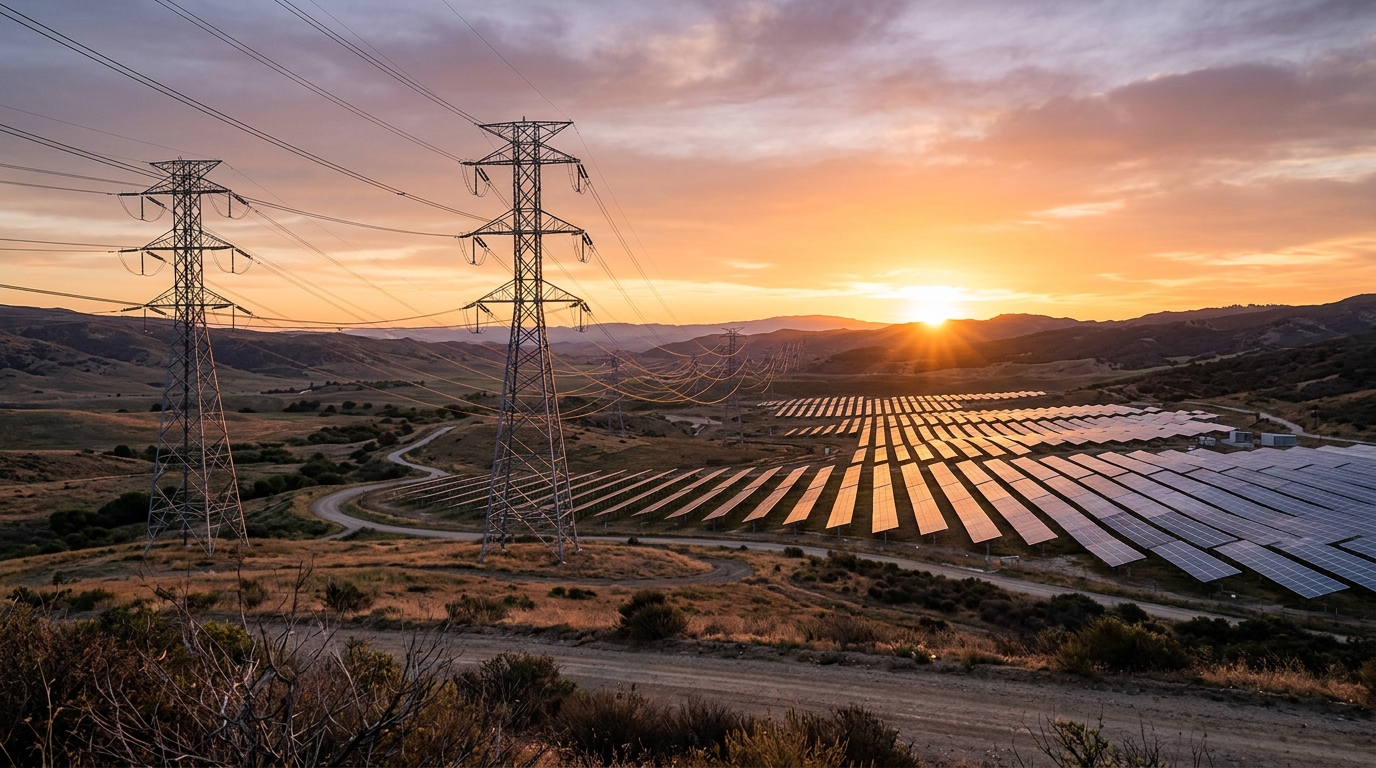
- Solar Module Mounting Structures (MMS): High-tensile, corrosion-resistant galvanized steel frames used to mount photovoltaic solar panels for utility-scale solar farms across Gujarat, Rajasthan, and international markets.
- Hardware Fittings & Insulator Accessories: Critical string fittings, vibration dampers, and conductor spacers that connect cables to towers.
- Industrial Fasteners: High-grade structural bolts, nuts, and anchor assemblies engineered for seismic and wind stress resilience.
7. Financial Health & Operating Trajectory (FY24 vs FY25 Analysis)
Karamtara’s operational metrics demonstrate steady growth, supported by the national expansion of renewable energy transmission corridors:
| Financial Parameter (₹ in Crore) | FY24 | FY25 (Full Year) | YoY Expansion (%) |
|---|---|---|---|
| Revenue from Operations | ₹2,403.30 Cr | ₹3,108.70 Cr | +29.35% YoY growth |
| EBITDA | ₹259.30 Cr | ₹339.50 Cr | +30.93% expansion |
| EBITDA Margin (%) | 10.79% | 10.92% | Stable industrial margins |
| Net Profit (PAT) | ₹102.65 Cr | ₹128.40 Cr (Est.) | Healthy bottom-line conversion |
8. Peer Benchmarking: Karamtara vs KEC International, Kalpataru & Skipper
To evaluate Karamtara's competitive positioning, its scale must be compared against established peers in the power transmission and engineering space:
| Company Name | Primary Focus Area | FY25 / Latest Revenue | EBITDA Margin (%) | Manufacturing Integration |
|---|---|---|---|---|
| Karamtara Engineering | Transmission Towers & Solar Mounting | ₹3,108.70 Cr | 10.92% | High (In-house rolling & galvanizing) |
| KEC International Limited | Global Power T&D EPC & Railways | ₹19,950.00 Cr | ~6.20% | EPC contractor with captive plants |
| Kalpataru Projects International | T&D, Oil & Gas Pipelines, Civil EPC | ₹19,600.00 Cr | ~8.40% | Diversified infrastructure conglomerate |
| Skipper Limited | Power Towers, Poles & Polymer Pipes | ₹3,280.00 Cr | ~9.80% | Direct product competitor |
9. Key Strengths & Operational Risk Factors Disclosed in Addendum
Investors assessing Karamtara should review both structural industry opportunities and project execution risks:
Core Investment Strengths
- 500 GW Renewable Energy Transmission Mandate: India’s statutory target to integrate 500 GW of non-fossil capacity by 2030 requires hundreds of thousands of kilometers of high-voltage transmission lines, providing multi-year visibility for tower fabricators.
- Extensive Backward Integration: Managing in-house structural rolling mills protects margins from intermediate conversion markups.
- Prudent Capital Reallocation: The ₹600 crore debt repayment plan provides immediate relief against fluctuating benchmark interest rates.
Operational & Financial Risks
- Raw Material Volatility: Steel and zinc represent over 70% of total manufacturing costs. While contracts often include price variation clauses, lag times can compress margins.
- Working Capital Intensity: Transmission line supply contracts entail milestone-based billing and retention money, leading to extended working capital cycles.
- Client Concentration: Large portions of business depend on tenders issued by Power Grid Corporation and major EPC contractors.
10. Regulatory Roadmap & What Investors Should Watch Next
Following the registration of the DRHP Addendum on August 27, 2026, the public offering process will advance through the following sequential stages:
- Registration of Red Herring Prospectus (RHP): The company will submit its finalized RHP to the Registrar of Companies (ROC), formally announcing the price band, lot size, and bidding dates.
- Anchor Investor Bidding: Anchor allotment takes place one day prior to public opening, offering institutional price validation.
- Public Subscription Window: Retail and HNI bidding will open for three trading days across BSE and NSE.
- Allotment & T+3 Listing: Allotment finalization and listing on BSE and NSE under SEBI's T+3 rolling settlement schedule.
11. Frequently Asked Questions (FAQs)
Why did Karamtara Engineering file an Addendum with SEBI?
Karamtara Engineering filed a formal Addendum on August 27, 2026, to officially revise its proposed IPO structure, reducing the overall issue size by 50% from ₹1,750 crore to ₹875 crore following SEBI's clearance on August 25, 2026.
What are the revised fresh issue and OFS components for Karamtara Engineering?
Under the Addendum, the Fresh Issue has been reduced from ₹1,350 crore to up to ₹675 crore, and the Offer for Sale (OFS) has been halved from ₹400 crore to up to ₹200 crore.
Why did the promoters reduce their Offer for Sale (OFS)?
Promoters Rajiv Singh and Tanveer Singh reduced their respective OFS participation from ₹200 crore each to ₹100 crore each, halving their personal secondary monetization to preserve greater promoter equity ownership and signal confidence in post-listing growth.
How will Karamtara Engineering use the ₹675 crore fresh capital?
The company has earmarked ₹600 crore (nearly 89% of the net fresh issue proceeds) specifically for the repayment or prepayment of outstanding borrowings and acceptances, significantly reducing interest costs.
How did Karamtara reduce its issue size without refiling the entire DRHP?
Under SEBI ICDR Regulations, an issuer is permitted to increase or decrease its fresh issue size by up to 50% via an Addendum/Corrigendum without being required to withdraw and refile a fresh DRHP from the beginning.
What does Karamtara Engineering manufacture?
Founded in 1996, Karamtara Engineering is an integrated infrastructure manufacturer specializing in transmission line towers (TLT), structural steel sections, solar module mounting structures, hardware fittings, and industrial fasteners.
What is the financial scale of Karamtara Engineering?
In FY25, Karamtara reported consolidated revenues of ₹3,108.70 crore (growing 29.35% YoY from ₹2,403.30 crore in FY24) and an EBITDA of ₹339.50 crore (10.92% margin).
When will the Karamtara Engineering IPO open for bidding?
The public bidding window has not yet been announced. Following the registration of this Addendum, the company will file its final Red Herring Prospectus (RHP) with the ROC to declare the price band, lot size, and bidding dates.
Verified Regulatory & Issue Resources
- Official SEBI Public Issues Addenda Registry: SEBI Public Issues: Karamtara Engineering Limited Addendum to DRHP (27 August 2026)
- Issuer Corporate Portal: Karamtara Engineering Investor Relations & Governance
- Registrar Portal (Link Intime): Link Intime India Public Issues Console
- NSE Upcoming Issues Repository: NSE India Public Issues Dashboard
Statutory Editorial & Regulatory Disclaimer
This article is published by Digital Arthalaya strictly for journalistic and financial education purposes based on the Addendum to the Draft Red Herring Prospectus (DRHP) filed with SEBI on August 27, 2026. Registering an Addendum does not constitute statutory approval, clearance, or certification of issue viability by SEBI. It does not constitute investment advice, research analyst certification, or a recommendation to buy or sell securities. Equity investments carry substantial market risks. Prospective investors must read the final Red Herring Prospectus (RHP) when registered with ROC and consult an independent SEBI-registered investment advisor.